

In my ongoing review series of HealthTech products, I had to include an article for Viome.
Over the past 5 years, the research coming out on gut health have been fascinating. While we know that every organ interacts with and impacts other systems in our bodies, how it all works and where the gut fits into this picture has remained mysterious for most of medical history. Viome is working towards uncovering insights for us, so I used their gut health intelligence test kit as an experiment in early February 2025.
I’ve been wanting to write this review for the past 6 months, but waited patiently to retest before sharing public opinions. Glad I didn’t jump the gun. 6 months ago, I may have been Viome’s biggest fan and cheerleader in social conversations, and have not paid much attention to some red flags due to my subjective feelings and excitement about the space. My knowledge on longevity and HealthTech innovation has 10x-ed within the past 12 months, which has also rewarded me with a more critical and scientific lens to view products.
You may want to skip to certain sections that are relevant to you because I tend to write essays. To give you a shortcut, in this article, you will find…
Backstory, gut microbiome science, and company info
What I dislike about Viome
Including some snippets of my results and David’s results
Including Viome’s official response
Thoughts of innovation
What I like about Viome
My goals & future experiments
Final words
Backstory, Gut Microbiome Science, and Company Info
To bring everyone on the same page, Viome started as a gut health intelligence test kit provider, then extended itself to oral health, and jumped on the ‘biological age’ testing trend.
The company now has a partnership with Evvy (vaginal microbiome testing) led by Priyanka Jain, the daughter of Viome’s CEO. So, the family has taken on an ecosystem to specialise in the research and analysis of microbiomes that are not commonly studied, contributing to advancements in medical ‘mystery boxes’.
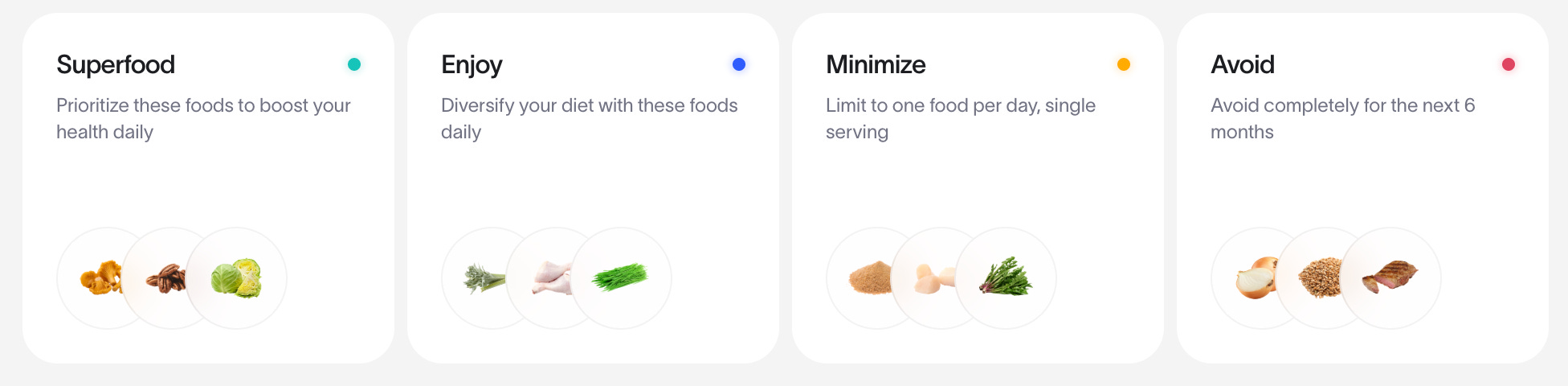
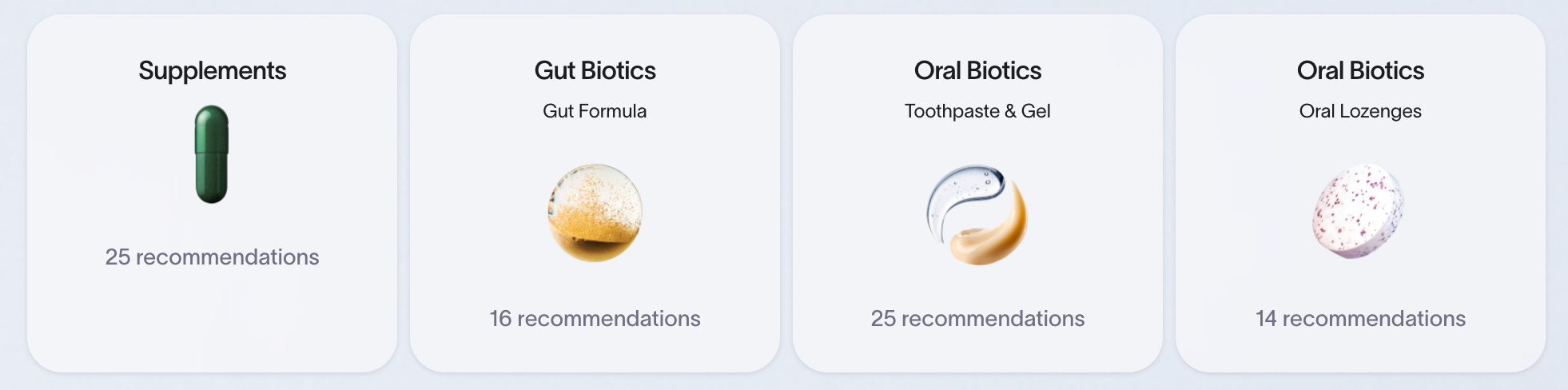
The gut health kit collects a stool sample, the oral health kit collects saliva, and the full body intelligence test collects stool, saliva and blood test. The results from the test kit are revealed in different categories (like ‘gut lining’, ‘TMA production’), given a score out of 100, and a ranking (attention, improve or maintain). These categories and scores are then used to produce a list of recommended foods and supplements, along with a list of foods to minimise and avoid (for the next 6-12 months).
This is a huge step into personalised nutrition. Personalised health has been the theme for longevity experts in 2023 - 2024, because everybody has slightly different needs. AI is making the transition into personalised medicine even sooner, and Viome takes advantage of this technology.
Let’s dive into the gut microbiome science.
The gut is another organ, just like the liver and kidneys, and the ‘gut microbiome’ includes all the bacteria, viruses, fungi, archaea and eukaryotes that inhabit the human body.
The gut is about 6.7–9.2 meters long, depending on the person’s weight (not height). Given the length, foods generally take 14 to 58 hours to move through one’s digestive tract (the average time being 28 hours).
There are ~10x the number of microbial cells in the human gut than in the whole human body, totalling roughly 38 - 100 trillion microbes, and 1,000 - 5,000 different species.
Women (before menopause) have a much higher variety of gut microbiome than men, and require a larger plant variety for a healthy diet. After menopause, the female gut microbiome starts to resemble the male gut microbiome. This is assumed to influence the “menopausal symptoms” like mood swings.
Women need +25g and men need +35g of fibre a day. More recent research is suggesting a diet of 1 : 2.5 ratio (fibre : protein) for the most effective protein digestion and longevity. So, if you are consuming 120g of protein, this means consuming at least 48g of fibre a day. However, most people don’t consume more than 15g of fibre a day.
It’s recommended to consume +30 different types of plant foods in your diet every week. This number includes herbs and spices.
Individuals with the highest fibre consumption have a 22-23% lower risk of all-cause mortality compared to those with the lowest intake. A 10g increase in fiber per 1000 kcal corresponds to roughly 4.3 to 5.4 fewer years of biological aging for some individuals.
Everyone’s microbiome is different, just like their fingerprint. Even identical twins are known to only share about 34% of the same gut microbes. Unrelated people share about 30%.
Couples who live together tend to have more similar gut microbiomes than siblings. In fact, the longer a couple lives together, the more similar their gut microbiome becomes. This is largely driven by shared diets and intimacy. For example, a 10-second kiss can transfer about 80 million bacteria. Choose your partner wisely!
The gut produces 95% of a person’s serotonin and 50% of their dopamine. The gut has its own nervous system (enteric nervous system) with neurons and neurotransmitters, allowing it to communicate with the brain, influencing mood and anxiety.
70% of the immune system resides in the gut. Your gut microbiome and the foods that travel through the gut influence (or “train”) your immune system in how it responds to irritants and disease.
Key vitamins produced by the gut microbiome: B1, B2, B3, B5, B6, B7, B9, B12 (in colon) and K2.
Leaky gut is highly associated with chronic stress, PTSD and C-PTSD, due to the damage elevated cortisol levels cause to the gut lining. These profiles also commonly experience vitamin B deficiencies, especially B5 and B12 (for women). However, in most countries (including Australia), testing for certain B-vitamins, like B5, is not available and discouraged.
Up to 40-50% of adults globally experience chronic, uncomfortable gut symptoms, like bloating, constipation and abdominal pain.
Faecal Microbiota Transplantation can be used to treat certain diseases. However, individual experiences show that it comes with the risk of inheriting the “healthier” individual’s “unhealthy” traits. For example, one may cure their severe acne within weeks, but take on depression in return. Fascinating stuff! Due to the risks associated with this method, healthcare professionals currently only prescribe this method under controlled care to treat severe bacterial infections in the colon.
Gut dysbiosis is linked to obesity, Type-2 diabetes, heart diseases, IBS, immune diseases and mental health diseases.
This brings me to Viome’s mission statement: “to digitize, decode, and decipher human biology for the prevention, early diagnosis, and treatment of chronic diseases and cancer.”
How? Well, by matching the trillions of microbial cells to different pathway activities and diseases. It’s the logic of, “X profile with groups of Y and Z always links to Type-2 diabetes.”
To access these insights…
Fill out their questionnaire that asks about specific symptoms (i.e. skin conditions, mental health conditions), including how much you poop and fart.
Collect your samples. For gut health intelligence tests (which is what we have done initially), this is only a stool sample. For full body intelligence tests (which is what we have done as a follow-up test), this is a stool, saliva and blood sample.
Ship the testing kit back to Viome’s lab in the US.
An AI model analyses the samples to produce “health zones” (individual scores for specific markers), “microbiome profile” (i.e. diversity, dysbiosis), and “recommendations” (foods and supplements). If you purchased the full body intelligence test, you will also receive a biological age and inflammaging score.
If you live in the US, you can purchase your custom supplements directly from Viome.


If you think there is a lot of pattern recognition and correlations going on, you are spot on. That’s how Viome operates. And that’s what most of the scientific research on gut health has been based on (along with some fancy trials of faecal transfers, changing diets to track changes in the gut, etc).
On one argument, Viome “must be” super precise and accurate, as there could be trillions of different combinations of microbiome a person has, some of which gut health specialists are newly discovering (i.e. the Tanzanian villagers who eat +100g of natively grown fibre a day). On the other hand, this is an extremely challenging space to operate in with “too many” combinations and possibilities to comprehend.
Side note: I won’t comment about the oral microbiome side of things. I know when to step down, and this isn’t my area of expertise… for now. Out of everything I have obsessed about in the longevity space, oral health is still on my list of things to research. All I know is that my dentist thinks my gums are very healthy, and I only have 1 filling from past carelessness (the average is 4.6 for people aged between 20 - 35). This space (how oral microbiome impacts the rest of the organs) is also very new, with lots of mysteries to still uncover.
The catch with Viome was their personalised recommendations. The world is a paradise when someone has all the answers for you. Eat exactly like this for longevity — how easy. What’s the other option? Keep guessing what your body needs? I mean, sure, it needs “whole foods”, but maybe it needs some whole foods more than others. It’s very tempting to know that you can crack the code, especially if you have the discipline, diligence and passion to follow through, as David & I did.
On top of that, there comes the very inspirational vision statement: “Imagine A World Where Illness Is Optional” — by Naveen Jain, the CEO of Viome.
I had a few things I wanted to work on and understand about my body early last year, so I thought, why not? And I wife-pressured David to purchase a separate kit too.
I had 2 main goals:
Find out which type of seafood was making me feel like sh*t.
I love seafood. Most of the time, I experience no issues when I eat seafood. Occasionally, when I get a “seafood mix” with +4 types of seafood, I experience an intense stabbing pain and sweating for about 2 hours. We went to the hospital twice for it in the past. However, we could not figure out the mystery, so I stopped having seafood altogether.
I knew that Viome is not an official food intolerance test kit, but I thought it could give me a rough idea. No harm trying.
Find out whether I could have an impact on my PMS symptoms by making my gut healthier.
About 4 days before my period, I generally experience the standard PMS symptom package that 40% of women have: bloating, mood swings, food cravings, constipation, etc. It was never severe enough for me to seriously pursue in the past, but I did not want to have any sort of monthly discomfort. If I can fully eliminate it, why not pursue this?
David had one goal: improve mental clarity and sharpness. Fair. For most individuals, cognitive health begins to decline from age 30, with faster and more noticeable changes typically occurring from age 60. So, if there is an age one should get on top of their cognitive health, it should probably be NOW.
I normally start my review with the pros, but honestly, there isn’t a lot to say, and the pros do come with some “exceptions”. So, I’m leaving that to the end.
What I Dislike About Viome?
The app that never loads
There is a line that a product needs to cross for me to complain about the technology, and it’s quite a generous one for HealthTech companies — rarely happens. My patience with HealthTech companies when it comes to user experience comes from the fact that the accuracy of testing and science backing of the model matters the most (by far).
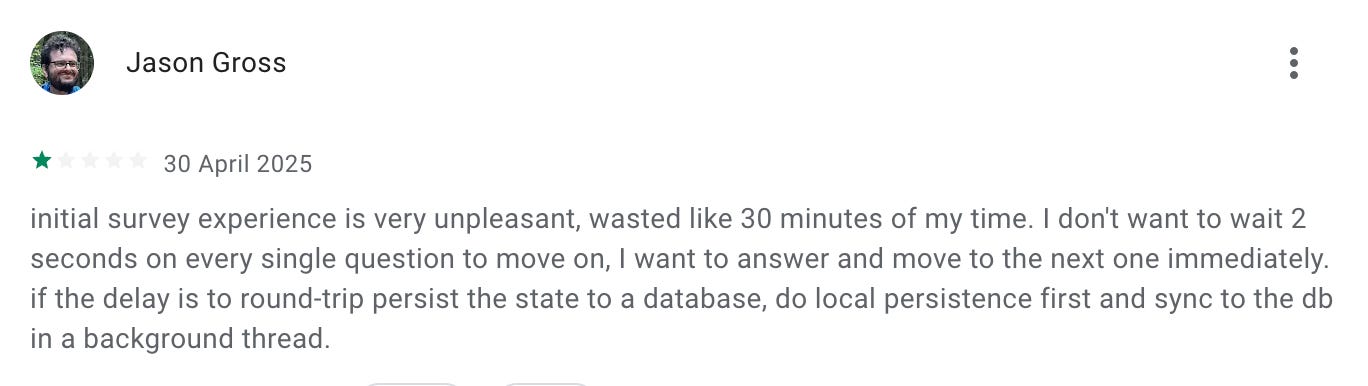
However, somehow, Viome crossed that line for David & I, multiple times. It took me over 50 minutes to complete their “5-minute questionnaire” due to how slow each question loaded and the constant crashes. The process was so painful that I aged during the process (pun intended), and for the first time ever, I was bothered enough to bother going to the Google Store and leave feedback. It still makes me feel bad, because I dislike complaining when there is a team of people working hard to improve an app. But the app just does not work half of the time. Maybe because we live in Australia and the US time zones with dev release crossover. But I hardly ever use the app now. Given up. And it seems like we are not the only ones. Sharing only 2 examples below.

Just use the desktop version.
Customer Service
I’ve had a few experiences with the customer support team, and if I was to put an adjective to describe my experience, it would be ‘sloppy.’
The US changed their tax laws for overseas imports and exports on the 29th of August. Unsurprisingly, living in Australia and having no connections in the US, I was not aware of this and what it meant for Viome parcels.
I tried to send my parcel to Viome mid-October via Australia Post. After a couple of weeks, my parcel was returned. The only explanation given was that other “biological and non-biological samples were also being sent back.” So, I wanted to reach out to the Viome’s team and explain the situation. Their customer support email was hidden, almost impossible to find. I had to explain the situation to the chatbot, which kept on telling me that this is my problem and Viome is not responsible for returned parcels. Then, I asked for the customer support email. Eventually, the chatbot gave me an email.
Between the 15th and the 22nd of October, we discussed the situation and what to do about it. Here is a snippet from the conversation:
“I can go ahead and process a free replacement kit for you if that works. Could you please confirm your shipping ZIP code and the month and day of birth so I can verify your account and set this up? When your kit gets to you and you’re ready to send it back, just give me a shout and I’ll walk you through the steps.”
I thought, “oh, that’s great. It seems like they are experimenting with a chatbot. They need to refine it, but my problem is resolved. Thanks, team.”
But my problem was not resolved.
On the 7th of November, I sent a follow-up:
“I just want to double check that another Viome parcel was sent to ………………………. AUSTRALIA? I did not receive anything (and usually parcels from Viome arrive pretty quick), so wanted to check with you.”
On the 11th of November, I received a very odd response, asking if I have the package on hand so they can look up the tracking number. Clearly, someone didn’t read my email properly. So, on the same day, I respond with:
“Not sure what you are referring to, sorry. I don’t have the package. That’s why I am following up. I didn’t receive an ID number.”
A day later, I realised that no one actually sent the parcel to me.
“I took a look at your account, and it looks like no new orders have been processed or shipped to you. The most recent order we have on file is the kit you sent back to us in October. Right now, we haven’t received those samples at our lab yet.”
So, I took a deep breath in and replied back with:
“We emailed each other about 4 weeks ago. My original parcel could not be shipped. So you replied with……………..[quoting].”
So, my parcel was sent on the 14th of October. It was a downer because I was so excited to send my results. It was also frustrating that someone forgot about a customer. I guess it was a human mistake. And maybe their support email platform does not show the interaction history (the same email thread). Felt sloppy to me.
Here’s the other thing: they never informed me that the root cause of the issue was US tax laws. So, we had the same issue, again. As a consumer, I didn’t know I was expected to read up on every country’s tax law updates for different sized parcels. Generally, I trust the company to explain the shipping process to me and the post office to ship my parcel appropriately. To my luck, both didn’t happen.
My parcel was held for a week in US customs because “Viome has to pay taxes,” said someone from DHL on the phone. I was quite confused, but the person on the phone was confident that Viome would know about this. So, my back-and-forth emails resumed. Here’s a summary:
Viome’s stance: “When shipping test samples internationally to Viome’s lab, all customs duties, taxes, and related fees are the responsibility of the sender. Viome does not cover international shipping or customs-related costs, including duties and taxes.”
DHL’s stance: “As discussed, Duties & Taxes are US government fees charged for items entering the country. Duties are the responsibility of the importer (receiver) when it comes to payment. Linked here is a guide explaining this in more detail. For that reason, we can’t accept a payment from you.” [referring to me, Doa]
My stance: “I bought this test kit before the US tax laws changed. This isn’t a rule imposed by DHL. If it were, then I would have paid at the counter while shipping. No one mentioned this to me. I asked the lady on the phone if I could make the payment on Viome’s behalf, and she said, no. I can submit payment or transfer money to Viome, and Viome can pay the taxes, if that’s an option.”
This went around in circles for way too long. I wanted to pay. DHL would not accept payment from me, as they were not the ones demanding payment in the first place. Viome would not even try to help my situation and took the attitude of, “too much hassle, not my problem.”
So, how was this resolved?
I called up several people in DHL over a week, and a lovely customer support lady had a genius idea to create a “business profile” for me, so I can “appear” as the “importer.” She bent herself backwards to resolve my problem creatively, when Viome did not give a f*ck. Viome did not even explain my why this was happening, making the assumption that I am supposed to be on top of US tax laws, while this lady spent 30 minutes on the phone taking me through the changes that happened on the 29th of August. She also mentioned that their team has been trying to contact Viome to assist with this issue as well (and no one responded to them).
Kudos to DHL! They had no incentive to help me. But they still did.
This is when the Viome experience turned rotten and left a bad taste in my mouth. Sloppy? Seemed more like once you pay for their product, they don’t care.
I don’t mind slow service. I don’t mind when products or people hit restrictions or limits. I minded but also forgotten about the initial sloppiness (forgetting to ship the testing kit). But man… the attitude of, once you pay us, it’s your problem, is unacceptable.
And this attitude is across every part of their business decisions.
End-to-end of their product experience, from the marketing emails (vs the number of educational product emails) they send you, to their app experience, and business model (selling “personalised” supplements)… it feels like the finance and marketing department threw a coup and took over the product and customer support leadership. Everything screams out, “I want to sell you more, more, MORE!”

The “personalised” science
Yep, here I am, critiquing Viome’s model. I want to make a few things clear.
I am NOT criticising the research behind gut microbiome and how it impacts the rest of the human body. Absolutely not disputing scientific evidence.
I am criticising Viome’s model from a Product Manager’s perspective, based on clear inconsistencies, lack of transparency, and lack of acknowledgement from the wider scientific or medical community.
I do not want to pull the focus on my or my partner’s results, because my criticisms are irrelevant to our results.
I will first share my experience, then brainstorm potential explanations, and share Viome’s response. You be the judge.
In February 2025, I was given a list of foods to avoid, minimise, enjoy and superfoods, along with a list of gut biotics and supplements. David did the same in March.
We were determined to stay strict to all recommendations and keen to explore some new supplements. David and I had a supplement routine like Bryan Johnson’s for a while. Eventually, through trial and error, we refined our list of supplements into the “basics” + “specifics to cycle on and off.”


My symptoms (bloating and sharp period cramps) disappeared. Those were self-reported in the questionnaire Viome gets you to fill out before the test. David somewhat achieved his goal of mental clarity too. However, this was mostly due to adopting a healthier diet and avoiding sugary foods/drinks on an empty stomach which used to give him a sharp blood sugar rise and drop.
David completed the next round of tests after 4 months, purchasing the full health intelligence test. He religiously followed through all recommendations, except for ‘superfoods’ (about 70%, as he didn’t like the taste of apple vinegar, sauerkraut, etc). Results: he’s had slight improvements in certain areas, but almost all of his supplements changed, his ‘avoid’ list disappeared, and most of his ‘superfoods’ changed. This was a bit confusing. Viome claims that one must avoid a food in the avoid list for 6-12 months. So, how come it’s suggesting after 4 months to “enjoy” these foods (not even “minimise”)? In fact, lean beef even moved from avoid into the “superfood” list, with the suggestion to consume this food almost daily.
I completed the next round of tests after 9 months, also purchasing the full health intelligence test. I religiously followed through the supplements and superfoods, and followed the ‘avoid’ list for 80% of the time. My results came back worse on many areas, stayed neutral in other areas, and only improved in a few areas. The shocking bit was that the specific markers for “leaky gut” worsened when Viome’s superfood and avoid list was all aimed at improving leaky gut. So, 9 months of effort for nothing? Some of my ‘superfoods’ and ‘avoids’ were flipped, which was quite concerning. So, by following Viome’s recommendations and regularly consuming artichoke, kefir, yoghurt and asparagus, etc, I successfully irritated my gut, and these became foods that I should ‘avoid’ for the next 6-12 months. How? On the flip side, buckwheat suddenly moved from avoid to superfoods, with no in-between recommendation of “make sure you slowly introduce buckwheat, as this was in your avoid list for the past 9 months.” The supplement list also changed significantly, with “tribulus” being introduced.
Despite being completely suspicious of these recommendations, I tried to consume buckwheat 3 times since the results. Each time, I experienced bloating and sharp stomach cramps. I did not need to consume 605g of tribulus (as suggested) because I already know how that would impact me. Last year, I accidentally took David’s tribulus supplement (known to boost testosterone in men) in 250g for a week (mixed up our pills). Let me tell you something: that week was a nightmare. Sometimes, we look back and laugh about my behaviour during that week. Let’s say I’ve gotten a taste of what it’s like to be a 14-years-old boy… with full blast anger, “you wanna fight, you think you’re tough, I’m tougher” energy, “leave me alone dude” attitude, and a never-ending horny-ness. At one time, I got so angry after burning the eggs that I walked outside and hammered that pan on the grass until it broke off. Not kidding. David looked scared because I generally either feel happy, dreamy, bubbly, bouncy, sometimes sad, but very rarely, angry. Not something I wish to experience again. And Viome recommends 2.42x the dose. Not sure what to think. My mouth dropped open.
So… what do you make of this story?
I was very confused and concerned. There were a lot of questions circling through my head.
I needed answers. I was not ready to rule out Viome, and wanted to give them a chance, an opportunity to explain this before any I came up with my theories and conclusions.
So, I sent them an email. It’s long with a lot of questions — no accusations, I respect the team and the vision they are striving towards. 9 days later, I received a strong response. I really appreciate that.
Here are my thoughts and theories… and Viome’s responses
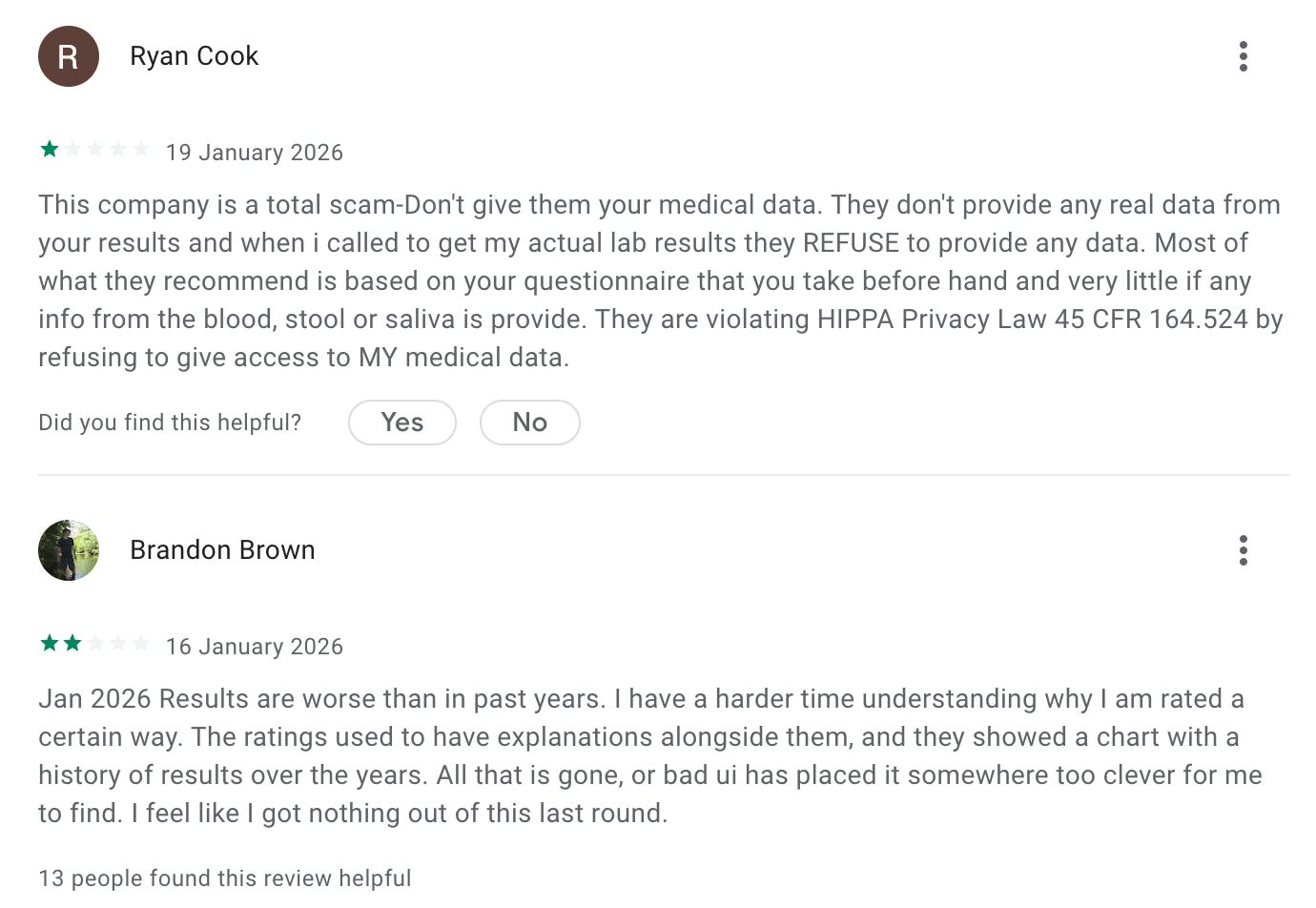
Viome’s recommendations are purely based on the questionnaire/survey (or heavily, >50%, influenced by it)
This could explain the sudden shifts between ‘avoids’ and ‘superfoods’.
Example: buckwheat moved from “avoid” (for leaky gut) to “superfood” (for mood) after I selected a mood-related goal, even though leaky gut indicators remain present.
A few other foods have also changed, following this logic (from my observations and deep-dives).
The downer is that it defeats the whole purpose of Viome. I mean, I could have asked ChatGPT, “recommended foods and supplements for female hormonal balance and mood.” It would have also handed me a generic risk.
Seems like others arrived at the same conclusion, too.
Viome’s response:
“Food recommendations are driven primarily by your health scores, which reflect gene expression activity across pathways. Self-reported goals do not override your biological data. Instead, the goals help highlight which pathways to prioritize and focus on when generating recommendations to support those specific outcomes.”
So, I guess we agree.
This comes down to subjective opinions, but I don’t see the value in following Viome’s recommendations any more than avoiding ultra-processed foods, refined sugars and carbs, and using my own AI model to ask advice based on specific health goals that I have.
Maybe I am being cynical, but I want to opt in for a model that identifies and prioritises what I need, rather than what I think I need (or what I want). It kind of kills the selling point for me.
Viome sample quality degrades over time (shipping & transit time impacts accuracy)
Viome’s response:
“Your sample remains stable for up to 30 days due to the preservatives used in the collection kits. There is no week-by-week degradation curve, and extended transit times do not meaningfully affect accuracy within that window.”
If there is no week-by-week degradation curve, then why have a “30 day” rule? Maybe the degradation curve starts after 30 days. I can accept that.
Viome’s recommendations and results are only accurate with full health intelligence tests (when a blood sample is also collected)
Maybe, the reason behind my markers getting worse, and the food and supplement recommendations list dramatically changing is due to the fact that the gut health intelligence test was never accurate to start off with. We assumed this may be the case after David’s results looked very different as well.
The idea that getting a full comprehensive test with more markers collected (blood AND stool) showing more accurate results makes sense.
The real danger is that you could be recommended foods and supplements that actually harm your gut and other organs. This really concerned me. Feels unethical to sell the gut health intelligence test (at least without clearly highlighting the risks associated with it) when data is not reliable?
Potentially, the recommendations could harm someone. Maybe that’s why my results have become worse over time — maybe Viome’s recommendations caused further harm to my gut.
However, how come neither the stool sample nor the blood sample could not pick up that certain foods/supplements were impacting me negatively — i.e. buckwheat and tribulus?
Viome’s response:
“Viome results are a snapshot of your biological needs at a specific moment in time. Your microbiome, cellular activity, and immune responses are highly dynamic…
In your case, this change is also influenced by the fact that you upgraded from Gut Health Intelligence to Full Body Intelligence. Your newer recommendations are no longer based on gut data alone. They now incorporate gut, oral, and cellular (blood) gene expression. As a result, a food that was previously beneficial for one system may be temporarily limited if another system now needs priority support.
For example, in the case of buckwheat, even if some gut lining indicators remain present, your updated data may show that its compounds now provide a stronger net benefit for pathways related to mood or neurotransmitter balance, while other foods are better suited to address gut lining support at this stage.
This is why recommendations can feel like a tradeoff, but they are designed to optimize your overall biological function rather than a single marker.
Gut Health Intelligence recommendations are not harmful. They are simply narrower in scope and may be refined once additional biological data becomes available through Full Body Intelligence.
Our recommendations do not guarantee that specific pathway scores will improve linearly, especially because the microbiome and immune system are influenced by many factors beyond food and supplements, including stress, sleep quality, illness, medications, and environmental changes.
It’s also not uncommon to see certain scores decline while symptoms improve. This can happen when the body is recalibrating... Fluctuations do not necessarily indicate regression. They often help guide the next phase of personalization, which is exactly why retesting is valuable.
Firstly, glad to hear that recommendations are not harmful. Makes me less concerned.
Secondly, I think this proves that the “recommendations” feature isn’t valuable.
The “avoids” list doesn’t contain foods that actually harm a biological system. If you choose to avoid those foods, you may optimise one aspect of your health. Emphasis on “may” because, depending on which test you purchase, what you should “avoid” will change. Also, because recommendations are a “tradeoff.” By avoiding certain foods, you are only “helping” one particular goal, while simultaneously not helping another goal. You can never win, never do the right thing for your health! There is no net positive. It’s net neutral, “which is exactly why retesting is valuable,” as Viome said. How convenient for the business!
It’s the attitude that every food is helping AND harmful to you, depending on the angle you choose to look at it — quite cynical (and vague), not a mindset I’d like to adopt with whole foods.
Thirdly, I am questioning the reliability of the model altogether.
“Biological needs at a specific moment in time” — how specific? Monthly? Weekly? Daily?
“Highly dynamic” — how dynamic?
Hence why, “fluctuations don’t necessarily indicate regression” — how much fluctuations within what time frame? What is the point of testing?
“Viome does not evaluate individual biomarkers in isolation. Instead, we analyze gene expression patterns and map them to functional biological pathways.”
Which genes? The human genome has approximately 30,000 genes. Some resources suggest between 20,000 - 25,000 protein coding genes.
Worse is that some of these genes (expression) change on a daily basis! I’ve lost my head in research papers for a couple of hours, then took another hour on LLMs for a different opinion. Conclusion: “inputs (dietary change, stress, sleep, etc) can shift gut microbial gene expression within 24-72 hours.”
Viome mentioned that stress can also impact the test results. 2 weeks leading up to the test were a stressful time for me due to family conflict. But this week, I feel incredibly excited to head off for an amazing hike in Tasmania. So, did I suddenly become “biologically younger,” or did my leaky gut suddenly move from X score to Y score? Do you see how murky the waters get?
Given all that, and even for the sake of improving accuracy, how is Viome comfortable with collecting only 1 stool sample? See the section below for my elaboration on this topic.
Viome’s just trying to make money
I mean… they make their profits from supplement subscriptions (which are expensive). This is a common criticism the company receives. If I was a Product Manager at Viome, I would put a ton of focus into building customer trust, especially when the business model raises suspicions.
I think I can comfortably make the assumption that most of their customers don’t purchase their test more than once a year. Some of their customers may purchase their test 2x a year. Plenty of their customers never repeat the test. That’s the nature of how “testing” companies work. Repeat customers are very challenging. People who are into regular testing (like I am) will most likely follow this approach on comprehensive blood tests instead, where they can actually see their exact results.
As mentioned before, how convenient it is that fluctuations can happen regularly, so customers should purchase a test and keep updating their supplements frequently. Not to mention their recommended supplement list is both long and in very odd quantities, so individually purchasing them online is a huge hassle, especially if you have to update them every 4-6 months. You may as well open a local chemist.
Hypothetically, if a company were to constantly update the supplements recommendations list it would incentive customers to purchase an ongoing subscription to their supplements service. But it can’t be too bad, right? After all, the gut loves a bit of variety! (Deliberate sarcasm).
Model limitations: how is Viome comfortable with collecting only 1 stool sample?
Many clinical stool tests deliberately require 2–3 samples collected on different days for well-studied reasons.
Stool is highly heterogeneous. A single bowel movement is not biologically uniform. Different regions of the same stool can contain different microbial communities; gas-producing microbes may be unevenly distributed.
This often falls through the cracks, but day-to-day variability is also influenced by stool transit time, circadian rhythms, hormonal fluctuations, and the last meal.
Hence, some studies show that one’s ****gut microbiome composition can vary from day to day, especially at the gene expression level, which is what Viome focuses on.
Examples:
Clinical parasitology guidelines often require 3 samples over 3 days because a single sample can miss up to 30–50% of detectable organisms.
In 20 healthy Belgian women with daily sampling over 6 weeks (713 faecal samples)…
For 78% of genera, day-to-day absolute abundance variation was larger within a person than between people.
72% of genera showed >10-fold shifts between consecutive daily samples.
Why is Viome asking for 1 sample? Here’s my suspicion: it’s a hassle. Some people experience regular constipation. Asking customers to collect 3 samples may be annoying for people. It’s a tradeoff — by simplifying the process, they are lowering the accuracy of understanding one’s biological needs. It’s also cheaper for Viome to only work with 1 stool sample.
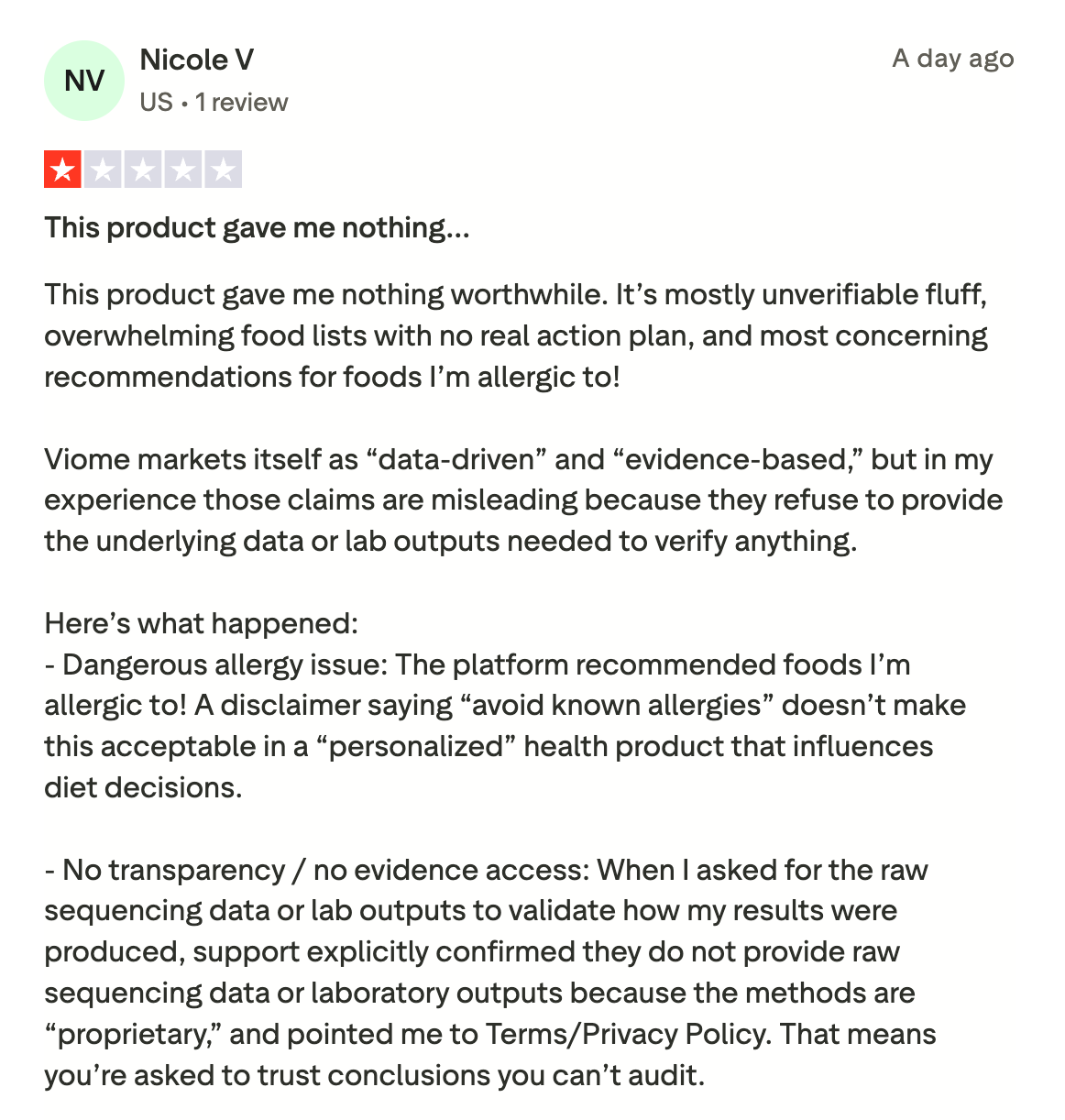
Viome’s response was sure of their AI model’s accuracy. I believe them. But an AI model is only as accurate as the samples provided. And the gut microbiome result accuracy does not mean accuracy of “recommendations,” as there are quite a few people who point out that Viome can’t tell if someone is intolerant or allergic to certain foods. One example below.
Model limitations: how come Viome cannot recognise intolerances?
So, they are confident that they can recognise when a food causes inflammation in the gut, but they cannot recognise intolerance. How? I thought that when one consumes foods they are intolerant to, these foods will cause inflammation in the gut. So, theoretically, Viome should be able to pick up when foods are not good for the gut. Right?
I know they have labels to say that they are not a medical diagnosis tool and shouldn’t be taken as an allergy test. But I would assume that they can see to some extent whether a food or a supplement hurts the gut or not. It just makes sense!
So, how come they recommended tribulus as a supplement? How come buckwheat (which gives me sharp stomach cramps for hours) is my superfood? How come tomatoes moved from ‘avoid’ to ‘enjoy’ when they still make me bloated? There are other examples like this too. How come Viome’s AI model can’t tell?
Model limitations: I don’t think I was being compared against others of my age and gender
I suspected this after the dramatic contradictions between TruDiagnostic and Viome test results for energy pathways, mitochondrial health and oxidative stress. Guys, not to brag, but I’m 16 years old with my OMICm biological age (9 years younger on TruDiagnostic) for a reason. My energy pathways are like fireworks.
Something that I learned from the TruDiagnostic experience is that inflammation and oxidative stress change immensely from age 18 to 80. “High oxidative” stress for a 40-years-old could be “excellent” levels for an 18-years-old, due to the high (or appropriate) levels of compounds tracked in the person that play a critical role in cellular health.
I don’t expect the exact same results, and it’s not realistic to expect that either, given the differences in models. But my results across almost all fields were exact opposites of each other. So, I asked, “are results benchmarked against age/gender cohorts or the general Viome customer population?” Here is the response:
“Your results are benchmarked against a large internal reference cohort of over 600,000 samples analyzed to date, rather than narrow age or gender bands alone.”
I hate to be right. Viome is comparing apples to oranges. Of course, the male and female microbiome is different. There are also several studies showing postmenopausal microbiomes as less diverse, and more similar to men than the premenopausal microbiome (e.g. postmenopausal women have higher Bacteroides sp. Ga6A1, Prevotella marshii, Sutterella wadsworthensis, and lower Escherichia coli–Shigella spp., Akkermansia muciniphila, Parabacteroides johnsonii).
I wonder… Who are these +600,000 people? Mostly women or men? What age range are they in? What % are pregnant or breastfeeding as they completed the test? Are they overall on the healthier or unhealthier side (i.e. what % of their customers have +1 chronic diseases due to lifestyle factors)? Who was my data really benchmarked against?
This may explain why their supplements are recommended in very strange doses (i.e. not taking male/female, body size into account). Just 2 examples, so I don’t bore you:
605mg of tribulus for me? That was shocking, especially given how I reacted to 250mg.
David was recommended the tiniest amount of ashwagandha, even for a woman. He’s a tall and big man. I’ve done a lot of research on ashwagandha for both of us as part of my “healing nervous system” protocol, and he has even tested out the recommended amount. The dose is too low. Maybe it’s “enough” to aid with one gut-related goal, but not enough for noticeable improvements.
Model limitations: biological age heavily relies on gut health
I had this suspicion due to the contradictory results from TruDiagnostic and Viome. I hypothesised that their model heavily relies on the stool sample (instead of blood tests, because this is their original area of speciality), and uses blood tests as an “extra” or “addition” to “complete the picture” — meaning, the blood test is only used when it’s not possible to view a pathway via the gut.
Here comes the truth:
“Viome’s BioAge and system scores are derived from functional gene expression across gut, oral, and blood samples, with significant input from microbiome activity. Other platforms, such as TruDiagnostic, rely more heavily on epigenetic or methylation-based markers from blood alone.”
Nothing wrong with that, but it needs to be made clear from the beginning. When a blood test is included in the testing kit, there is a certain assumption that comes from the customer.
While gut health is very important (and certainly a goal for me to work on over the next 3-5 years), I’m not interested in my “gut health age”. It’s a subjective opinion or a mindset (a certain way of viewing health) — I acknowledge that a lot of gut health research is based on correlations, and this is still a very new field — so, I view gut as one organ among many other organs, rather than the key determiner of mortality/biological age.
Again, nothing wrong with that, but want to share with my audience, so you are aware of Viome’s bias towards gut health.
Model limitations: questions around scientific backing, reliability and transparency
I don’t mind that Viome is not FDA-approved. But I expect full, end-to-end transparency and evidence of reliability, accuracy and science-backing. This is where Viome enters into the “dodgy” territory.
Here’s their response:
“Viome has conducted internal validation and repeatability studies, and our science is supported by peer-reviewed research. You can explore published studies and methodology in more detail at viome.com/publications.”
Yes, this link does show that Viome has peer-reviewed publications describing their RNA/metatranscriptomic* approaches and some clinical work. I tried to consume a lot of this content and used LLM to assist me.
But, almost all of this work is produced and validated by Viome (how convenient) AND it does not automatically validate the consumer-facing “health scores” + recommendation engine.
*Metatranscriptomics: study of the total RNA produced by microbial communities at a specific time. It reveals gene expression within microbes, their metabolic activities, and responses to environmental changes.
“Peer-reviewed research” ≠ “independently validated consumer product”.
Maybe the study is there, but I could not find a publicly available table to answer (and to share in my blog):
“If I do the test 3x back-to-back under controlled conditions, what’s my expected variance band?”
This is the question I sent to Viome. In retrospect, I should have also asked to see this table across shipping delays.
It seems like I am not the only one who noticed this. In fact, it seems like someone even tried to send multiple samples to Viome to run this test.
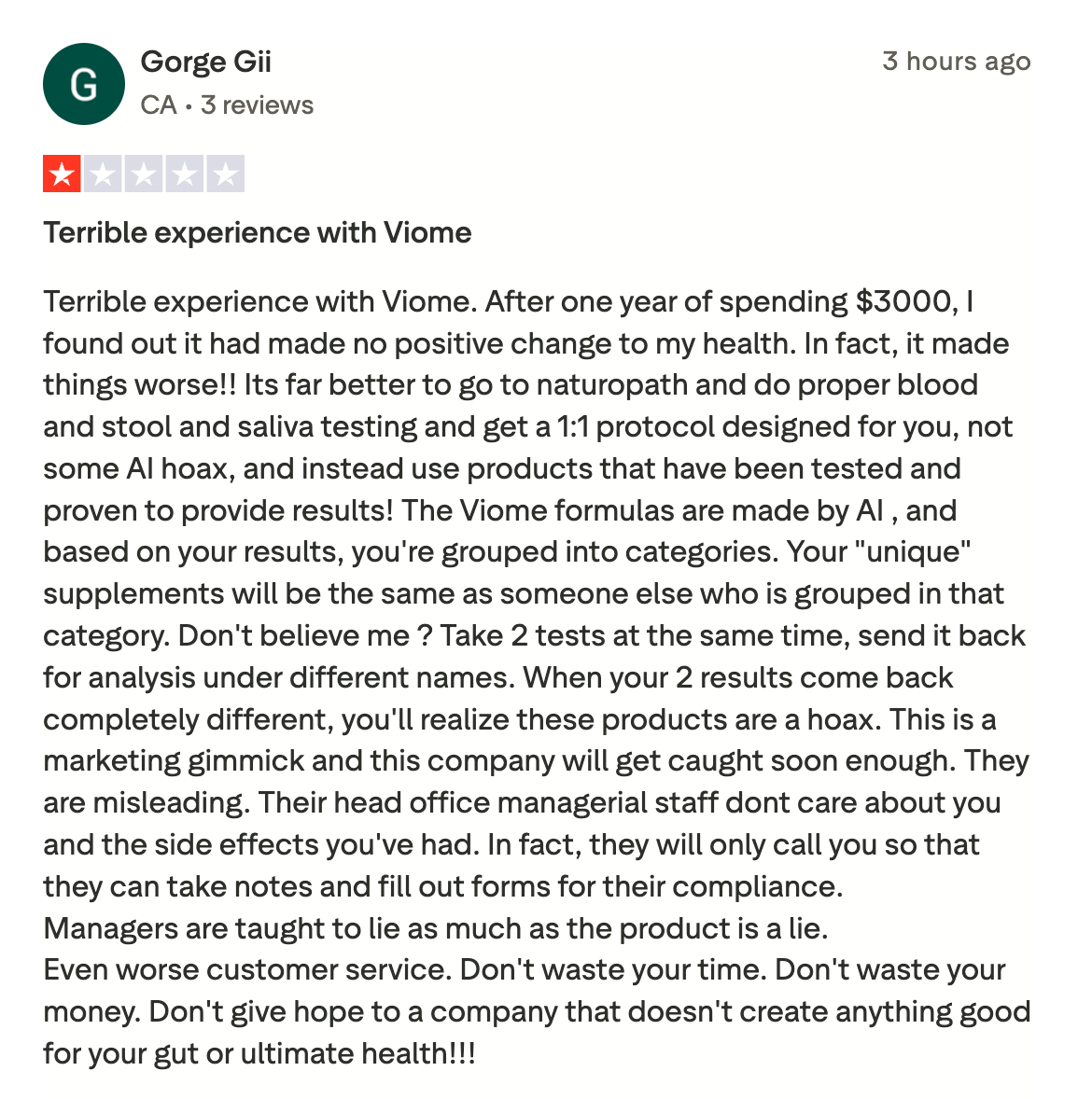
See 2 other researcher reviews from people smarter than me.
Exert from XCODE.life (screenshot):
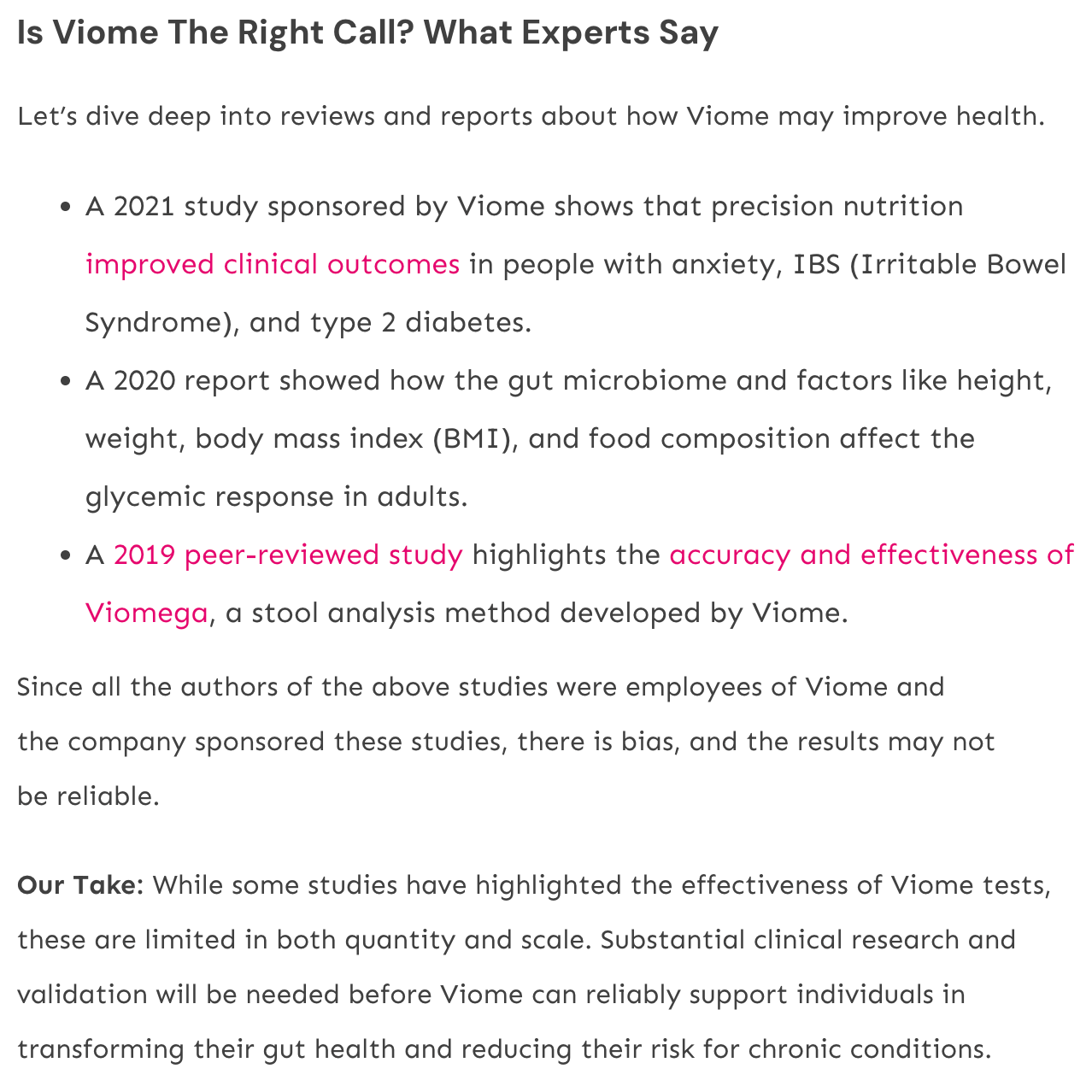
Found a review on Wired recently.
“In reality, there is very little clarity to these “insights,” there’s almost no transparency behind the “health scores,” and the list of food recommendations is all over the place. If I were a cynic, I would think that Viome is making things deliberately obtuse so people get overwhelmed and just shell out for Viome’s wildly expensive “Precision Formulas” (i.e., supplements). I might be a cynic.
…
At this point, I was three layers deep, but Viome does not tell you in the app what it’s actually testing. We reached out to Viome, and Grant Antoine, a naturopathic doctor and the nutrition and clinical lead at Viome, responded that Viome uses RNA sequencing to decode the gene activity of mitochondrial proteins; the company does have its own research facility with its own proprietary sequencing methods. Antoine also pointed out that the raw data from RNA sequencing isn’t interpretable or useful without Viome’s AI-enabled bioinformatic analysis.
Without any numbers that I could double-check or run past any other experts, it was hard to trust these results.”
Interesting. I’m the sort of person who would get a 2nd opinion on most things relating to my health (i.e. go to see 2 specialists, if a surgery is required, maybe even 4 specialists).

If I was a product leader in Viome… in such a new field with lots of caution about longevity science, rather than trying to keep my model inside a black box so potential competitors don’t copy my secrets, I would try to optimise my product for transparency so I collect customer trust. This is especially important because to my knowledge, Viome is not selling their test kits to dieticians (as it’s not a medical diagnosis tool).
And there you have it. Mini essay on “cons” is over.
It’s such a shame because I’ve been a big fan of Viome for about 4-5 months last year. It’s also a bit embarrassing because I talked them up a lot in my social circle and now am tracing my steps back with the attitude of, “my mistake, don’t judge me.”
Thoughts of Innovation
Given how long my “what I dislike about Viome” section was, I will keep this short.
Unfortunately, supplements are not shipping to many countries outside of the US. Would have been convenient for us to order directly from Viome. On the flip side, I discovered Bioniq (UK company), which does custom supplement mixtures.
Despite not being able to ship supplements to Australia, I was able to go through their “upgraded” funnel to “purchase” the option with a subscription for supplements. I hope that’s a product mistake/accident. Just make sure you read their T&Cs and check that you will actually receive every component of the product to your address before you pay.
Test Kit (collecting samples): would be nice to add an additional finger prick. It was very hard to collect blood for me. David did not struggle as much, but it was still challenging for him.
Email comms are out of date (about 7 - 10 days after). Example: if my parcel arrives to Viome on the 2nd, I will receive an email on the 10th to inform me that my parcel arrived. Likewise, for when my results are available to view.
The “recommendations” list should recognise the customer context/history and provide tips accordingly. Example: it would be nice to provide a tip to a customer on how they can slowly introduce broccoli to their diet as a “superfood” after avoiding this food completely for the past 6-12 months. That way, changes would not be shocking to the gut.
Collaborations: it would really help their credibility to get out of their ecosystem and collaborate with external HealthTech businesses, gut health professionals, etc. Not longevity influencers they can pay — I do trust some of them, but again, it breaks trust when you pay someone to say nice things about your product.
More thought-leadership: Viome strikes me as a company that is too marketing-heavy. I would like to see more thought-leadership and educational communication (and less promotional) by the company. I don’t want them to lead the market because they are the first one who entered into the space — that’s not a long-term strategy. Currently, they still exist in their own eco chamber.
On Viome’s questionnaire, have an option to skip the “goals.” If recommendations are influenced by the goals a user selects, then I would not want to intervene with these results — I would like the option to skip this question or select “improve general health.”
What I Like About Viome
First Time Recommendations “Worked”
Now, this is going to sound contradictory. I went on and on about the faults and lack of transparency and potential risks (or ineffectiveness) of trusting Viome’s recommendations. Now, I’m saying that they actually work. What???
I think this goes back to an earlier comment I made: “the goals help highlight which pathways to prioritize and focus on when generating recommendations” (quoted from Viome’s response). So, it’s no surprise that when I faced some challenges with my gut health (during the first test) and filled out the questionnaire with noticeable symptoms in mind, the recommendations helped.
For full transparency, this is what worked.
Bloating: especially leading up to my periods, I used to experience noticeable bloating. Sometimes, without an explanation, after dinners, I would bloat too. I was suspicious of tomatoes (which are a big part of the Mediterranean cuisine, my birthplace), white rice and gluten. Turns out, I should be avoiding those. I felt validated. No more issues ever since. Viome now reckons I can “enjoy” tomatoes, but I’m still limiting my consumption, as I feel like consuming a lot of tomatoes still cause the same issue.
Constipation** leading up to periods: not sure if Viome’s recommendations really helped with this, but I know that eating more fibre did. I used to follow the standard guide for female adults: 25g of fibre a day. Guys, that’s the bare minimum. Your life will change if you consume more fibre, as long as you slowly introduce more fibre. There is a ton of scientific evidence for that, conducted in “healthy” individuals. I have slowly worked my way up to 40g of fibre a day last year. I experimented with 50g of fibre and realised that this is the threshold for how much fibre my body can handle, so eventually settled down for 45g of fibre (on average) every day. I also set a goal to track my water intake and increase my water intake, which greatly helped. So, not sure how much of the credit actually goes to Viome for this.
Sharp and heavy period cramps that require a ton of pills: this was probably the 2nd biggest win after the bloating mystery. Viome introduced me to 2 herbal supplements, which were a game-changer. I later found out that these supplements were known in traditional herbal medicine for period cramps and regulating female hormones. Dandelion Root and Nettle Leaf. I would like to highly recommend these to everyone suffering from period cramps, because I have not taken period-related pills ever since May 2025, but… I am aware that everyone’s body is unique, so don’t want to take the responsibility of making recommendations. If you want to try, approach with caution.
The unexplainable sharp stomach cramps with sweating and fever 2x a year: we already knew that this was due to a type of seafood, as it only happened when we cooked “seafood mix”. Viome suggested it could be scallops and clams. So, I tried every other type of seafood individually — I had the guts to do that — and all came out clean. Ever since, I never had scallops or clams, and I never experienced food reaction. However, within the questionnaire, I suggested my suspicions about seafood. So, maybe, they took a hint.
**Constipation means 1 day of not going to the bathroom properly. I have to clarify this because people generally think of constipation as not going to the bathroom for more than a couple of days (which is a BIG PROBLEM in my opinion).
AI-powered result analysis & hyper-personalisation
It’s a pro in theory. It definitely gives them an edge in the market. I am not convinced of the reliability of their recommendations. But it is convenient to receive a list of things to eat and avoid (if you don’t have time to do your own research).
I shared Viome’s response in my blog. Not for me. But maybe for you.
It’s very disappointing because I deeply believe in the idea of “personalised medicine.” However, this month, with some of my other research as well, I’ve been questioning the practical reality behind this idea. If you have the finances to get tested on a daily or a weekly basis on multiple different tests, you could constantly adjust your nutrition and supplements, like a product manager on edge. But if you don’t have a team of advisors and health professionals following your every step and testing you frequently, like some of the longevity influencers do, how accurate is “personalised” medicine when the frequency of data is far apart, like every 6 months? Or perhaps this again comes down to the reliability of each test (product).
Marketing, product packaging, discounts, vision & mission statements
As mentioned before, they have an excellent marketing team. Too good in my opinion. Great marketing strategies, seasonal discounts for affordable test kits (in comparison to other options in the market), modern slick design, and an inspiring and ambitious vision & mission statements. Loved their shiny test kit boxes that come with a card from Viome’s CEO. Promotional activities have been very well thought through. Good for Insta posts, if you’re into that.
My Goals & Future Experiments
I gave up. I surrender. Going to travel around the world for the next 6 months with a YOLO attitude eating Taiwanese fried chicken, spring rolls, taquitos, churros, philly cheesestakes, Crumbl cookies, and whatever else is in my YouTube feed.
Jokes.
Not the travel part, though. When this post goes live, I will be starting the most daring hike in Tasmania, then the 2nd most daring hike. There is a Turkish saying, “the world is a pan and we are the ladle, round and round we go.” That’s the plan.
During this time, and for the rest of the year, I am going back to the basics again — avoid clinically tested intolerances/allergies and eat a variety of seasonal whole foods.
In the past, I crafted my diet based on how well I knew my body. I wish I could offload this to Viome or another company. But given my track record of blood test results, it seems like when I was hands-on with my diet, I had pretty good health. What does being “hands-on” include?
Comprehensive blood tests 2-4x a year (depending on my budget) to identify areas to work on. I aim for optimal results across everything, not the ‘averages’.
Adopt a “leaky gut” diet for full protection and continue working on healing my nervous system. I sound like a broken record, but trauma is highly linked to leaky gut.
Consume 45g of fibre a day. This amount is specific to my body after 12 months of testing, in proportion to daily protein amount.
Drink an adequate amount of water every day.
Eat a variety of foods (50 types of plants a week), adopting the rainbow-diet mindset.
Avoid ultra-processed foods, refined sugar, refined carbs and artificial sweeteners.
Try to source ‘organic’ options for certain heavily sprayed plants, or ‘wild’, ‘hormone-free’ etc, where/if my budget supports.
Cap takeout and restaurant foods, especially after my long world trip.
Additionally, in London^, I am planning to get a proper food intolerance and leaky gut test done to identify foods to avoid. If anyone has any recommendations on this, please let me know!
Final Words
At the end of the day, ask yourselves, why do you want a gut health intelligence test? When I really thought through this question, I realised that there is a better product out there for every reason.
There are clinically approved food intolerance tests that I can complete, provided by medical professionals.
There are comprehensive blood tests I can purchase to track certain metrics.
If I’m interested in my biological age, I’ll go with TruDiagnostic.
The use case for Viome is no longer there for me. Because after 12 months, despite still believing in the role gut microbiome plays in longevity, I learned that the gut likes variety.
To finish off, I highly support HealthTech businesses to be innovative and ambitious. I understand how many iterations are needed to perfect formulas and frameworks. However, certain HealthTech products carry a heavier risk and responsibility, hence my strict judgement on Viome. Hope they continue to grow and iterate. I’m curious to see how Viome’s products change over the next 3-5 years.
^Oops, did I mention London? I guess I have to share the news now. We won’t be coming back to Australia anytime soon. September onwards, keen to connect with fellow product people, HealthTech workers and longevity nerds in and around the UK. I’ll be applying for product roles as well. In the meantime, don’t expect to receive many articles from me. I’m planning to be very busy drinking coconuts near a waterfall.
All the images I use have been generated using deepai.org (the pop art generator). 🦸♀️
If this post is helpful to you, it will probably help others too. Share with a colleague, and if you haven’t done so, subscribe.
See my other HealthTech product reviews below: