

While I was interviewing product roles, hiring managers placed emphasis on assessing if I shared their understanding of good “product culture” and the “product mindset.”
Most of the PMs I’ve asked for advice about becoming a product person mentioned I should nail down, or embody the right attitude — the product ways of thinking and adopt the right product culture.
This can be confusing for aspiring PMs because words like “culture” and “mindset” are quite vague. They are not defined by the whats (as in… specific actions one does), but by the whys and the hows instead.
To unpack this, I will use analogies from theatre 🎭 and philosophy 🪶📜.
“What is the product mindset” (or “what is a product culture”) might be one of the most philosophical questions to ask a PM. In a way, it’s similar to asking another human, “what does it mean to exist,” or “why do we think the way we think about life?” Plenty have never deeply thought through an answer, despite being fairly good at product in itself.
Each PM may respond with a slightly different answer. Below are the most common definitions product people give.
“Focusing on outcome over output.”
“Delivering genuine value to users by deeply understanding their needs. Building empathy and connection to users.”
“Encouraging humility, adaptability and continuous feedback for iterative improvements.”
“Encouraging cross-functional collaboration and acknowledging the impact of product decisions on different parts of the business (and vice versa).”
“Experimenting with innovative ideas and learning from data.”
“Adopting a long-term value focus, rather than implementing reactive tactics.”
“Communicating a clear and strong product vision.”
To put it simply, someone once told me that product culture is about “how the product gets built” — what information is considered in the decision making, who gets involved in the process, what are the must-have tasks to complete before delivery, etc. This is my favourite definition.
Note: I have used the words “product mindset” and “culture” interchangeably. To clarify, a team’s product mindset will shape their product culture (hence the emphasis on hiring decisions).
Despite the fact that there isn’t one right and clearly defined answer to what a good product culture is, almost all PMs instinctively know what isn’t a good product culture. So it’s something important to address, and understanding it will help de-risk yourself in the job market.
Let’s strip back to the basics. One may like to simply put it as, “to be.”
Well, then perhaps the question is, “how to be a Product Manager?” Knowing the answer will get you through the door.
I’m not trying to advocate for “fake it ‘till you make it,” but using basic theatre technique (i.e. deconstructing the character and script) may help you to learn and pass your product interviews.
Know your character. 🎭
The goal is not to pretend like someone else, but instead to find connection and understanding. This will allow you to empathise with the experiences of a Product Manager, use the right terminologies, and think through problems like a PM.
Some questions you may like to find the answers to…
What are the common goals PMs aim towards (i.e. user engagement and retention)?
What are the common challenges PMs face (i.e. balancing priorities of internal stakeholders with user experience optimisation)?
How do PMs solve or get around these challenges? Answers will vary, but having a broad understanding is better than not having a clue.
What are the things that annoy most PMs? Or, what are the things PMs complain about the most?
What are the skills PMs use the most?
How to know your character
Talk! The simplest and most effective way of understanding Product Managers is to talk with them. I underlined the importance of scheduling coffee catchups or calls with product people in my second post of this series. Hearing first-hand experiences from PMs with a variety of backgrounds (business size, industry, target audience, etc) will ground you in the reality of Product Management.
“At the end of this research phase, you should be able to describe product management as a person with their distinct personality traits and lifestyle. I know that the role of a product manager differs according to the company. However, you should still be able to recognise the trends and patterns. You can also create 2-3 different PM personalities/archetypes to capture this variance.”
Know your script. 📜
You don’t need to nail down each dot point (as that will naturally happen with experience), but try to have a broad understanding of the following.
What are the words commonly used by PMs to describe their workflow?
What is a day-to-day of a PM? What are common tasks/actions PMs complete in a week?
Who are the allies of a PM? Who (or which teams) work closely with a Product Manager?
What are product processes like? Why are these processes important? Some examples:
What’s involved in ‘discovery’ work?
How to create roadmaps?
How to conduct user interviews?
How do sprint planning meetings work?
How to know your script
Most of this is theory work. I highly recommend varying your resources. Read books, online articles, the job descriptions posted on LinkedIn, listen to podcasts, watch YouTube videos, ask an AI bot, etc.
If you can get some exposure to product teams (or experience assisting/shadowing), that would be a bonus! ✨
Once I had a broad understanding of how “to be” a Product Manager, I blended in like an artist in a masked ball. I became confident enough to speak like a PM (using the product terminology) before my first product role.
But that was not enough.
Because there is an element of “force” that is involved in acting. The ways of thinking are not instinctual, yet. There is too much brain power involved in even simple tasks, like leading a sprint planning session.
Going back to philosophy, to add a single layer of complexity, we can also say, “I think, therefore I am.” 🧠 (— René Descartes)
Well, how do Product Managers think? Knowing the answer will have you thrive. In theatre, this is equivalent to forming a deep connection or empathy with your character. It comes with time and practice. First, one must “be,” then one can “think” and rationalise how to be.
This stage of growth requires you to shift from the “what” to the “why.” While linking actions with consequences in a variety of situations, there will be a lot of “aha!” moments. There will probably be a few (or more) “ouch!” moments, as everyone makes mistakes along the way.
Some examples…
From: “Why do we have to test this? Isn’t it obvious? Everyone in our team would totally use this feature.”
To: “5 people are not an accurate representation of our wider audience. We should probably test a prototype of this feature before continuing with the build.”
From: “I feel like everyone’s attacking me. They’re constantly asking me questions and justifications. I need to prove my case to them.”
To: “Am I thinking and communicating clearly? Do I have reliable data to back this string of thought? Am I bringing on a biased view? Let me listen through my team’s concerns and see how we can address or test them.”
From: “If the potential customer says they’d use this feature in the interview, then we can take their word for it. Why would they lie to us anyway?”
To: “I sounded very keen in the last user interview. They may have been shy to reveal their honest feedback. I will change the last few questions to see if customers who say they’ll use this feature are willing to commit on the spot. At the end of the day, we need people to pay for this feature.”
How to start thinking like a PM
You can read LinkedIn posts written by PMs, but this way of learning is limited when compared to gaining exposure and experience. Refer back to my explanation of the “3 types of valuable experiences” for more information. Shadowing and/or assisting a product team in your company before making a career transition is incredibly valuable.
Tip: ask A LOT of questions. Do NOT assume anything. Examples…
Why do we need to consider this?
Why did you make this decision instead of that?
How come you are not committing to a date, but instead giving a date range for delivery?
How are you planning to challenge this stakeholder on their idea?
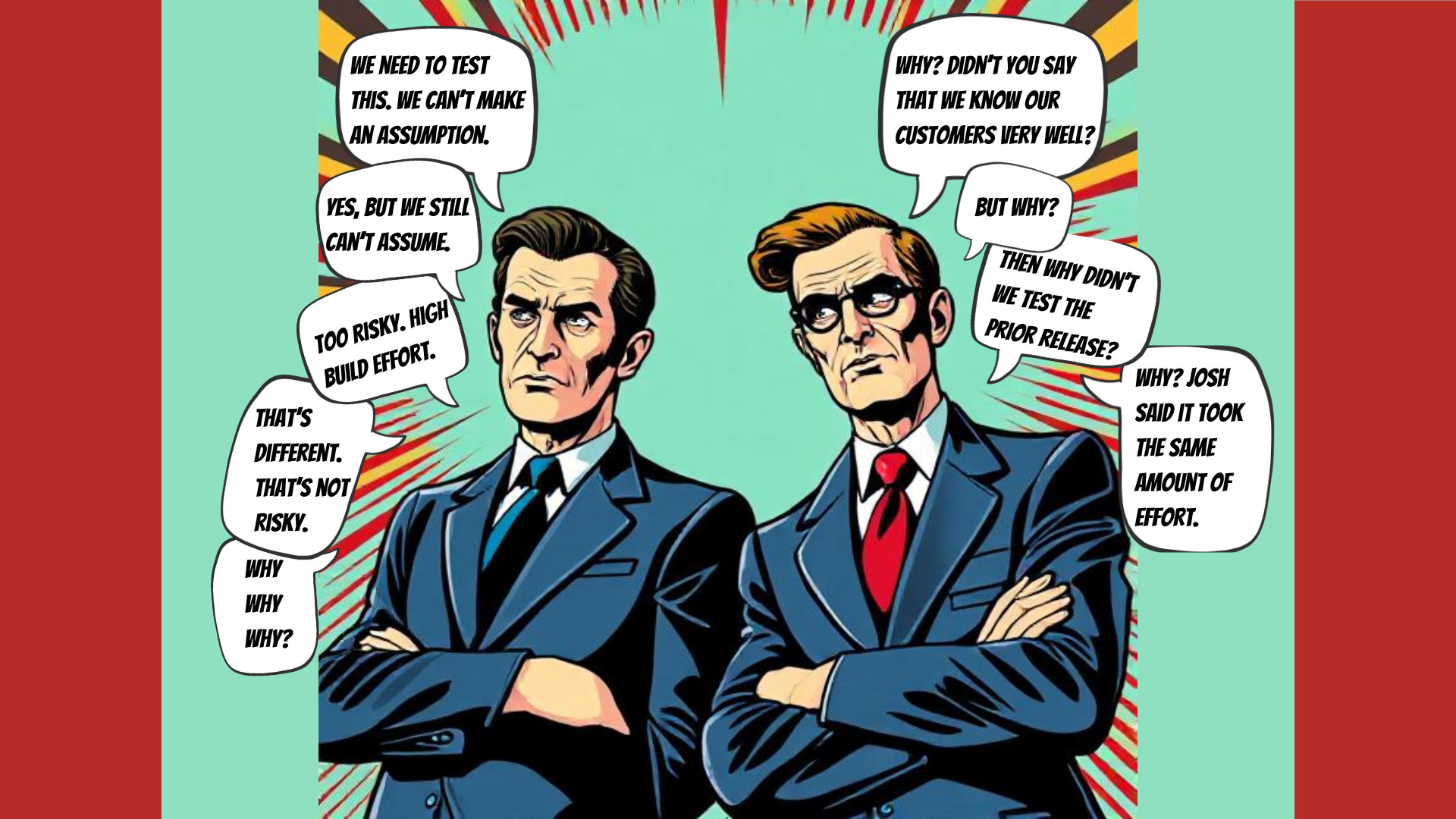
Note: I intentionally used the words “how to start thinking like a PM” because our thoughts develop as we grow. Our experiences shape our thought patterns. No one thinks perfectly.
Once you have a strong understanding of the why, you can also start to get cheeky. 😏
You will have confidence and a stronger understanding of when, where and how much to push the boundaries, take risks and cut the corners (or drill down / dig further in), and who to consult (users, internal stakeholders, etc) — instead of following the same theory book or checklist for each project.
You can call it the “product intuition.” It’s not always accurate, but if you can learn from mistakes, then it can only become more accurate/reliable over time. In acting, the equivalent would be improv, when you have to continue the performance without a script.
Note: while this process requires experience, it doesn’t take too long, as long as you have self-reflection skills. As I’ve learnt more and become more attuned to working in product teams, my “mask” moulded to the shape of my face. The awkwardness disappeared, and a new way of thinking became more natural.
Once you start to instinctively think like a product manager… 🪄🎩 you think (like a PM), therefore you are.
Hence, the “product mindset” is not unique to Product Managers. You can apply a product mindset to solve a problem in an organisation without having a Product Manager title. That’s also why you can create a resume with no product experience, but with a “product focus” — Aha!
Hint: I’ll elaborate on how to create a product-focused resume without a Product Manager experience in an upcoming post.
Final Thoughts…
There are a handful of great books about the product culture and the product mindset. The most popular one is probably Marty Cagan’s book, ‘Inspired.’ My approach to these books is similar to my approach to self-help books.
Read, think through, complete additional research and come to an understanding of the key ideas/themes.
Summarise into ideals.
The reason why I use the word “ideals” is that how books describe the product culture can be quite idealistic. You might wonder if certain practices only exist in utopia, especially after chatting with other PMs. Theory doesn’t always match the practice. That doesn’t devalue the theory.
I think of the product mindset as a North Star to aim towards (for myself).* Likewise, the product culture is a North Star I seek in the companies I interview for. We don’t have to get it right 100%, but knowing what the ideals are can guide us to focus and be more intentional with our approach.
Fun Fact: while the stats (%s) vary, most organisations don’t think they have the product culture “nailed down” (perfected) yet and are looking for ways to improve. So, this is a North Star for almost all product people.
Take what resonates. Leave the rest behind.
The best practices are the ones that resonate with you. They are the sustainable, realistic and achievable methods for you. They should be thought patterns you can naturally adopt. When you rationalise concepts or use a different set of words to describe the same outcome, you are personalising an idea, so it fits your character better. This is great.
Sometimes, certain ways of thinking don’t suit you. Maybe it clashes with your personality — in that case, you might see if there are others you can learn from. Maybe the concept is too early for you to internalise and learn. Have you ever read a book for the second time and realised that you completely missed the point of a chapter X years ago? Or maybe you formed a new interpretation of the chapter, because you’ve grown and gained new perspectives in life. It’s ok to leave what doesn’t resonate with you behind, because if that thing will provide real value to your life, then when you are ready, you will come to the realisation in your own time.
*My definition for a good product culture: “a company (not just one team) that consistently aims to apply a collection of practices, patterns of thinking and processes that have a track record of building and shipping high-quality products which are easy to use and provide strong value to the customers.”
Then, I can expand on what the “collection of practices, patterns of thinking and processes” are (i.e. “focusing on outcome over output”).
All the images I use have been generated using deepai.org (the pop art generator). 🦸♀️
If this post is helpful to you, it will probably help others too. Share with a colleague, and if you haven’t done so, subscribe.