

This post was written in early January 2025, but was unfortunately erased while migrating Substack domains.
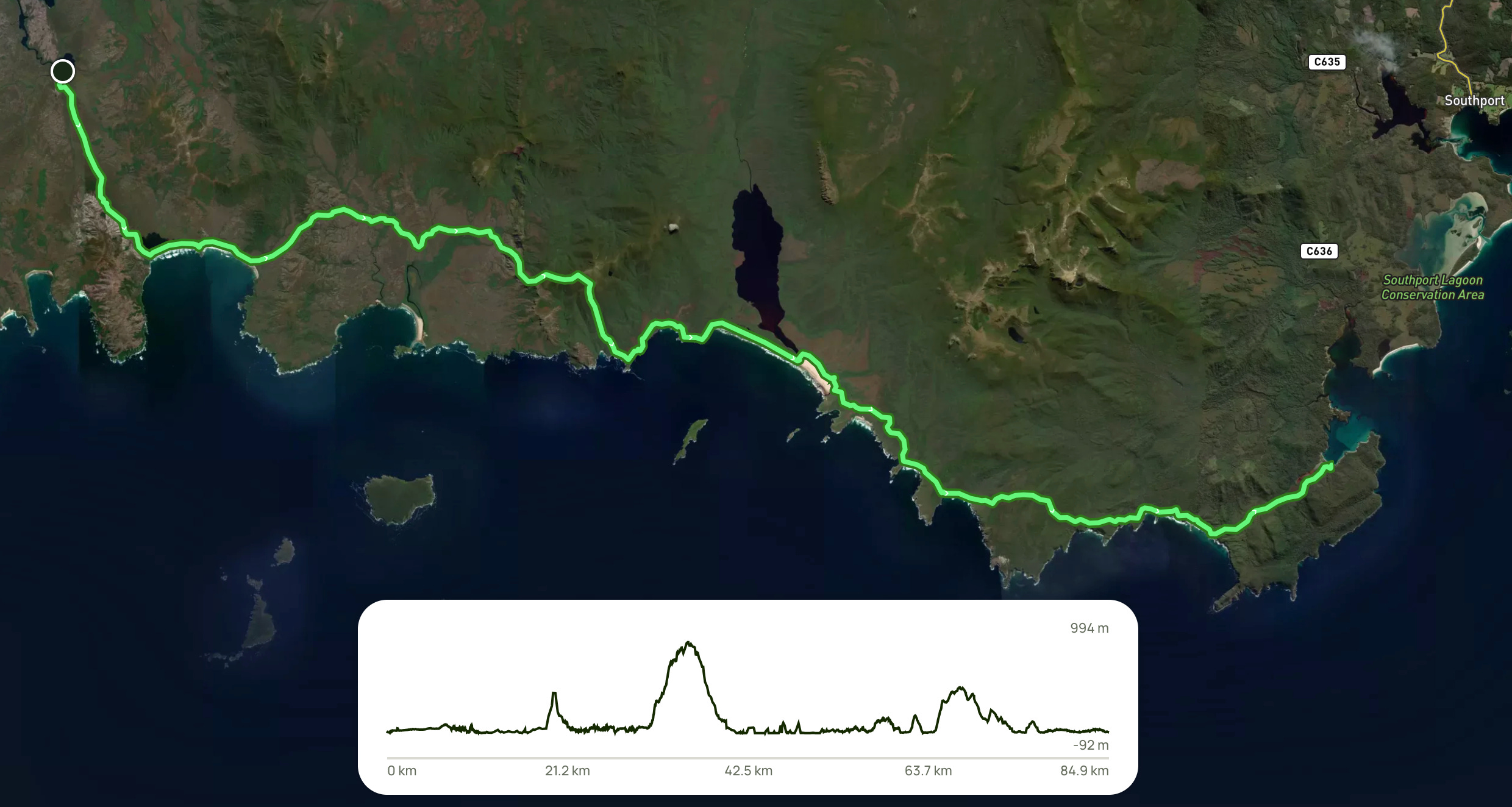
Overview
Length: 86km, one-way.
Duration: 6 days (if you want to pace through), 7 days (most fit hikers follow this option), or 8 days (if you want/need to take a rest day).
Seasonality: this hike is in an alpine region with rapid weather changes, and weather (rainfall) impacts the difficulty and safety of the hike (river crossings, depth of mud, etc.). Technically, you can complete this hike during November-March, but I would recommend aiming for a sunny and dry week. We hiked in late December.
Grade: 5 (very tough!), considered to be in the top 10 (arguably the 6th) toughest long hikes in AU.
Terrain: deep mud, waterways with running water, excessive overgrowth (with spiky plants), lots of fallen trees (logs to climb over), beach walk (with inlet crossings & peddles), steep ascend/descend in rainforest, rocks, river/creek crossings (on foot & via a rowing boat), and some boarded walk (beginning & end of the trail).
Skills Required: scrambling, steep climbing, steep ascent, muddy terrain hikes, exposed high wind alpine hikes, and rowing a boat.
Climate: Alpine climate (weather changes rapidly). Expect heavy rain and strong winds during the summer. When the sun is out, it feels about 20 degrees. Towards the top of the iron bounds, frostbite may become a risk.
Animals on Trail: we came across cute pademelons, baby seagulls, red bellied parrots, pied oystercatchers along the beach, baby carpenter snake, tiger snake, wasps, a bunch of small harmless spiders, a lot of leeches and a lot of mozzies.
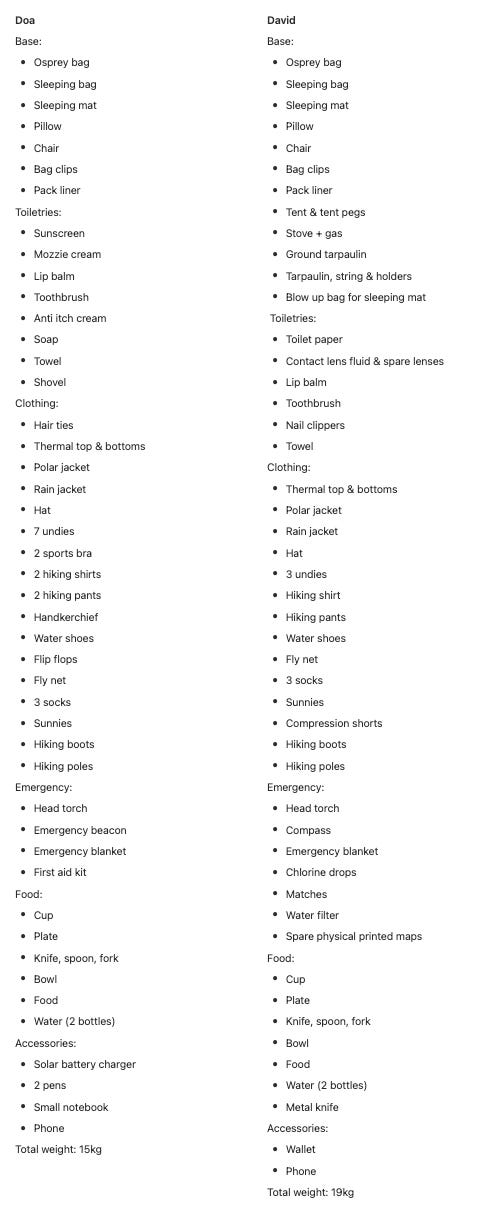
HIGHLY recommend you bring PLD (personal locator device / emergency beacon), gaiters and hiking poles (for your safety). Most people would argue that you should not be doing this hike without those 3 items. Find our full gear list at the bottom of the page.
Community Support: FB PAGE LINK & https://www.alltrails.com/trail/australia/tasmania/south-coast-track-full-walk
Popularity: you can encounter between 4-12 people each day on the trail. There were two days that we encountered nobody.
Accessibility: this is a point-to-point track. The Cockle Creek end (south) can be accessed by a shuttle mini bus (https://www.twe.travel/), and the Melaleuca end (north) can be accessed by a small airplane (https://www.paravion.com.au/). Both shuttle mini bus (2 hours drive) and airplane (1 hour flight) departs from Hobart. At Cockle Creek, you can camp. At Melaleuca, you can either camp or use one of the two walker’s huts (4 beds available in each). Going Southbound is the most popular option. However, going Northbound will be a bit easier to complete, so I would recommend that to first-timers.
Packing Guide
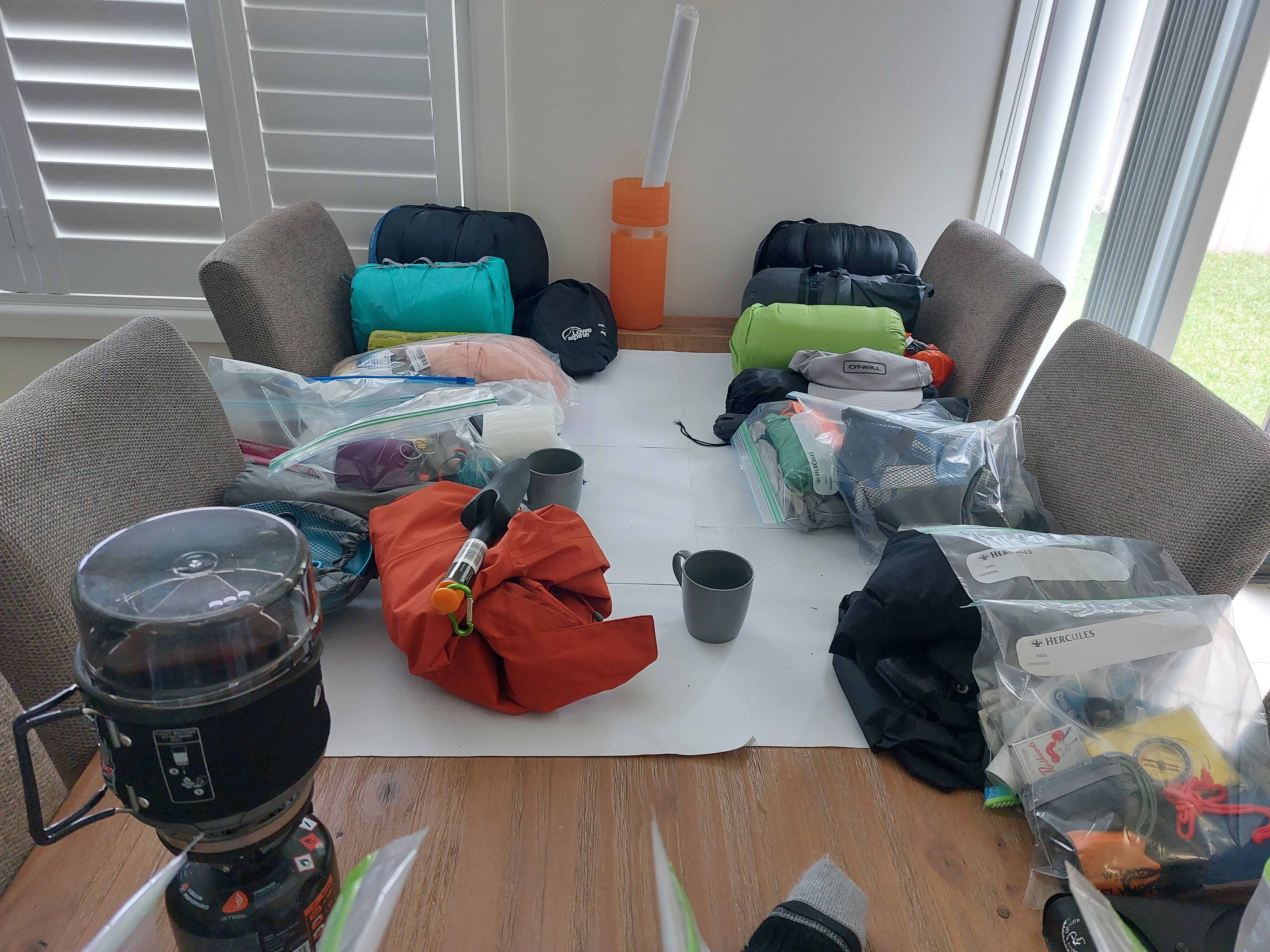
I would not strictly follow what we took on this trip. If we were to do it again, there would be a few adjustments we would make to this plan.
We double-packed a few of the toiletries, I took too many undies, we never had a fly issue (so the nets were useless), never used plastic cups, knives or plates, and a few other things which were ‘nice to haves’ and not that necessary. We also want to swap a few pieces of equipment to find lighter versions.
I am 160cm and weigh 49kg. In retrospect, going out with 15kg was too much for me (almost a third of my weight). Carrying a heavy pack contributes to exhaustion but also increases your risk of injury and foot overuse, which are annoying. Next time, I’ll be aiming for 12kg instead.
I did not unpack what was in our first aid kit, but next time we want to be taking less band aids (as we did not use any on this trip) and some strapping/sleeves in case of injury.
Missing items: gloves, Panadol, tape for repairing tent/blow-up things
Food Guide
I think we were spot on with this, except for the emergency pack. I really recommend that you carry a full day’s worth of emergency supplies. Don’t skimp on emergency food as we did. The South Coast Track can be the trail where you have to take a rest day. It could be from injury, exhaustion, or really bad weather conditions.
By giving you the info below, I feel that it will help you to do a comparison.
We both lost weight on the trail. To maintain our weights, we would have to carry much more weight, which we were not willing to do. Instead, we loaded up on carbs before the hike and treated ourselves after the hike.
My general maintenance at the time was 1500c (24 years old, 160cm, 49kg, 23.5% body fat), and David was at 1800c as an almost 35-year-old, about 185cm (on a calorie deficit, which was a part of his body composition plan for the year).
Each day, I aimed to eat about 1400c, and David aimed for about 1650c. He was ok eating less, as he said that he had a higher body fat % in comparison (male vs female).
Our total food weighed 10kg, which can certainly be optimised. I did some research after the hike and found alternative foods with higher calorie counts and lower weights. I’d also be bringing some electrolyte sachets on our next long hike, as I had some cramping in my foot along the way.
Breakfast: powdered smoothie packs from Backcountry Cuisine, different flavour each day. The best breakfast! They are so yummy, the mocha flavour helped my coffee withdrawal symptoms, 400c, gets some liquid in your mouth at the start of the day, and very light to carry.
We both had one packet each: mocha, banana, mixed berry and chocolate flavours.
This can also be a good lunch option.
We tried Backcountry Cuisine’s cooked breakfast for one morning as well to add variety. It was very nice to have a warm breakfast one morning. It was more filling. It weighed more and took up more space in our bags. Cooking and cleaning in the morning takes time (although next time, I am planning to eat from the packet by shaping it into a bowl, rather than carrying a plate and a bowl). I wasn’t sold on it (won’t swap it for my smoothie). However, for a tough hike that’s 7 days long, I’ll buy it again to have variety on one morning (probably after the toughest day as a reward).
Lunch:
I had a chief meat bar, cliff oat bar (250c) & about half dried fruit (mango/apple alternating).
David had 1 chief meat bar, All Natural Bakery’s oat bar (430c) & about half fried fruit (mango/apple alternating).
On days 5-7, we swapped dried fruit with lollies (1 pack snakes & 1 pack dinosaurs).
I liked our lunches because I really miss the taste of meat on long hikes (and I think Chief bars are yummy). This lunch contains fibre, carbs, sugars and a fine amount of protein.
David got sick of his oat bars after the first 4 days. They also weigh more.
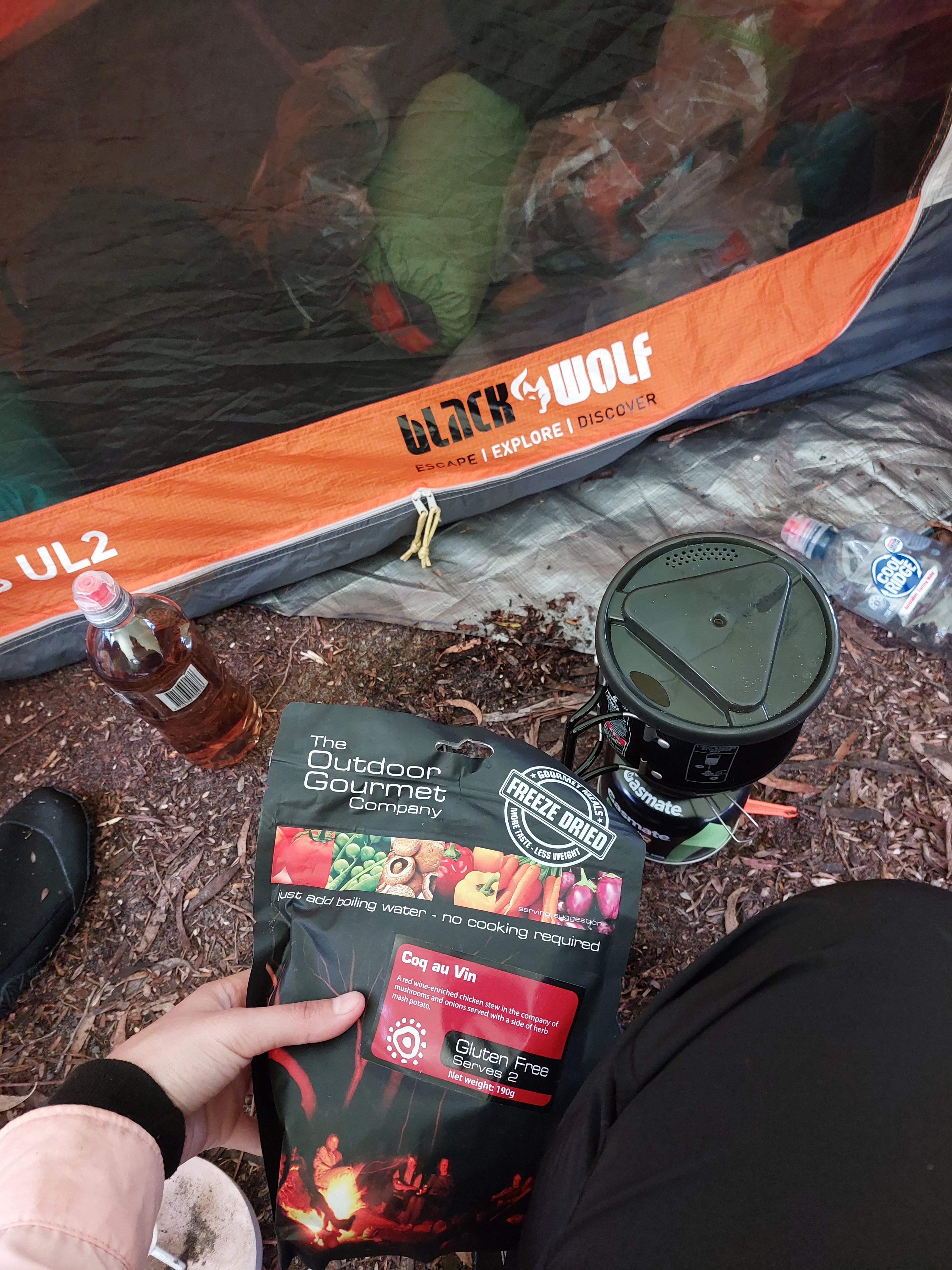
Dinner: we shared Backcountry Cuisine’s gourmet meals. New flavour each night, they were delicious.
Emergency: 2 powdered smoothies, 2 tuna packets, dried apples.
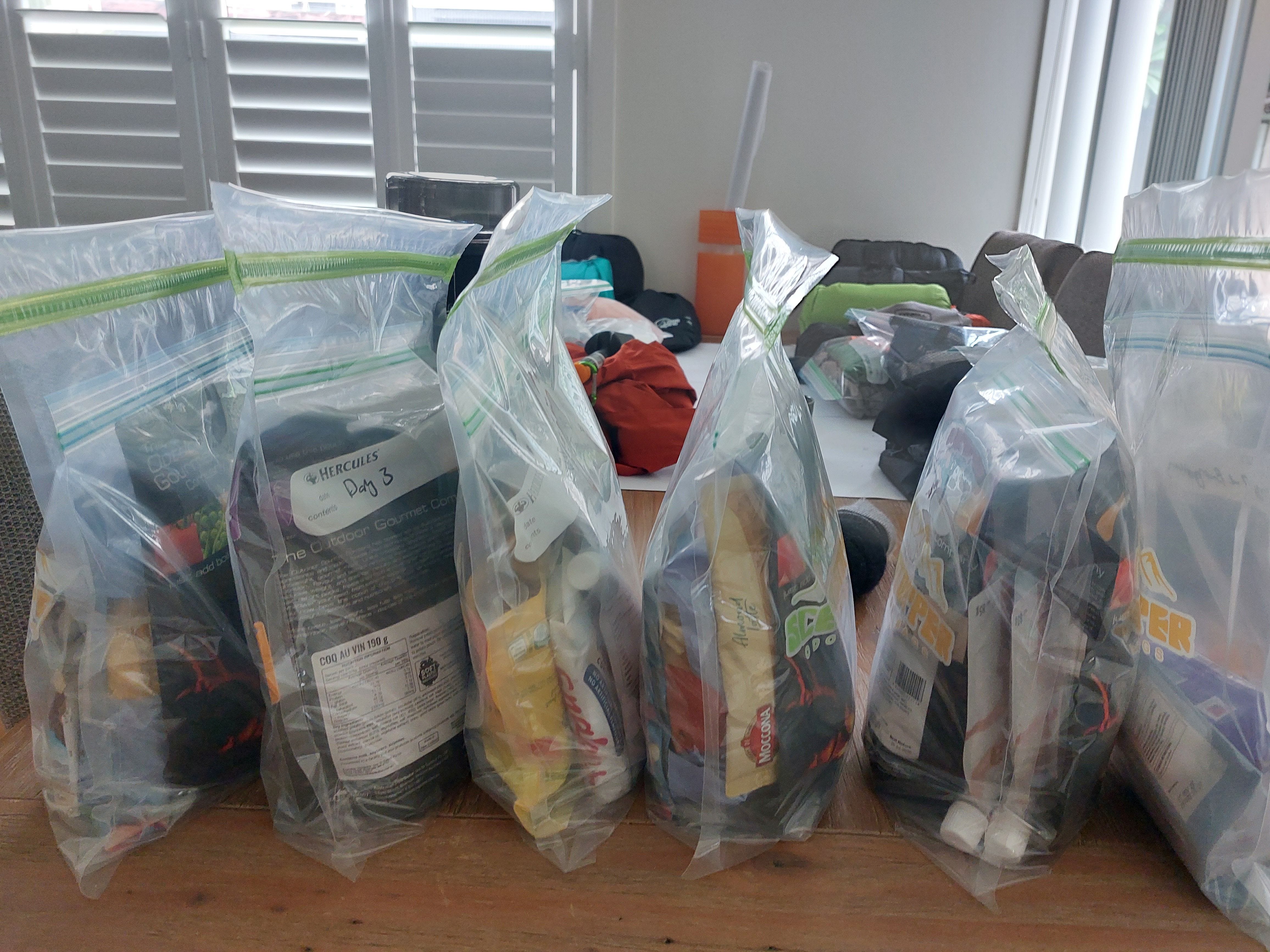
Tips: Seal each day’s portion of food and mark it as “Day 1” etc. Bring a separate “no smell” seal bag for rubbish. You won’t have to hang your food off a branch to try to protect it from animals (mostly rats) stealing.
Training Guide
Training is a must, and there are a few reasons for it.
Training for safety is the most important reason, so you don’t get injured. Most people get this part right.
Training for enjoyment is more challenging to get right, and while it’s not a must, I view it as highly important. You really don’t want to be on a 7-day hike suffering every day, dragging your feet from point A to point B, exhausted. What is the point of being out in nature, exploring lands that most people don’t have access to, if you can’t even laugh, enjoy, and appreciate the beauty that you are within?
We train so we can enjoy every day on a hike. However, one year of training only got us to have fun on 2/7 days, be ok on 3/7 days and feel exhausted on 2/7 days. David’s calf was a bit off (no injury), and I left with a minor overuse injury on the right foot (healed with 1-2 weeks of rest - I began running again at week 3).
An observation I made on the trail was that almost everyone we’ve seen on the trail had more than 3 years of intense hiking experience.
Basics
Getting ‘hiking fit’ and building up experience in hiking can be underestimated by a regular fit person who goes to the gym and runs. I’ve seen half-marathon runners struggle with grade 4 hikes in Tasy. Trust me; hiking is different. Just like how you can’t grab a basketball player and throw them in a volleyball match without any training, you also can’t grab any generic fit person and throw them out on the South Coast Track.
For this track, we made sure to…
Have done multiple multi-day hikes
Have done at least one 4-5 day hike
Can hike with a bag weight +2/+3kg heavier than your planned weight
Have completed other Grade 5 hikes before (can be day-long ones)
Can put up a tent, cook, and pack your bag under any condition; have a regular routine we know so well that we can do it in the dark, during a storm, when completely exhausted — under any condition.
Strength training (upper body & lower body); I had 2 lower and 2 upper body days
For the first time, I believed that doing leg days in the gym wasn’t enough and felt proud of pushing myself for upper body days. This trail gets you to climb (over tree roots, giant logs and rocks), especially if you are my size.
Cardiovascular training; I finished the year being able to run 10kms which was good (but the fitter you are, the more enjoyable this hike is going to be); I went on 4x 6km runs a week
Mobility, balance & flexibility
About 25% of people I’ve seen on the trail had some form of strapping/bandaging/sleeves around their feet, ankles, calves or knees. Steep ascents are tiring, but steep, slippery, muddy descents can be dangerous and very uncomfortable for your joints/tendons
This part of the training isn’t very fun/cool, and it’s also one that a lot of people miss/underestimate, especially if they didn’t have many injuries before; I’ve been burned in the past, so now I have 2 short mobility & balance days per week and try to incorporate stretches as much as I can
Terrain
Mud training; sounds funny, but please go find some knee-deep mud (or more) because the mud on the South Coast Track left us mildly traumatised (it’s a killer); unmaintained trails over a wet winter might be your best option.
Ruined trails with lots of fallen logs; sounds funny again, but I’m sure that I jumped/climbed over 100 logs and crawled under countless times with a heavy pack; this is tiring, frustrating, and I felt like I was becoming a hurdler by the end of the track.
Basic bouldering/clambering/scrambling; not as important, especially if you are tall, but having done a few scrambling trails will really help you.
Steep ascents & descents.
Grade 5 hikes; if possible, go to Tasmania (grading system is different in other states)
Beach & pebble walking; while this is not difficult, I still recommend that you do a hike which involves these terrains
This trail has a section where you have to row an old and very heavy boat multiple times; make sure you are comfortable with this
This trail has multiple deep river crossings; make sure you are comfortable with this
Climate
Alpine hiking; to get used to the sudden weather changes, heavy rain, heavy wind and the cold; go to a mountain (ideally go to Tasmania)
Hiking & setting up the tent under heavy rain; it’ll suck if the first time you try to set up a tent is when you’re on the SCT
Please note that we were not experienced hikers while training for the SCT. We got serious about hiking at the start of 2023. Prior to that, I’ve never stepped inside a gym, never run before, played any team sports, or even got on monkey bars while growing up. Very unfit and uncoordinated background/history.
If you came from an active lifestyle, you may view my guide as ‘over the top’ — maybe you don’t need to train as much as we did.
Check out the SCT Walking Notes daily guide.
Questions: if you have any questions about my notes, drop a comment, and I’ll reply.