

David and I planned to do a half-marathon in Melbourne at the end of August. This would have been my first half-marathon, so I was overly excited about it. You guessed it; yeah, that’s not happening anymore.
I ramped up my running routine quite fast during May and June, running 4x a week and doing a leg workout in the gym 2x a week. I enjoy running, love eating (hint hint), and wanted to have a great time during the race (instead of feeling miserable). So I saw no issues with working my legs 6x a week.
35 days ago (yes, I’m counting it), while on a 16km run at Centennial Park, I felt my right leg going numb and with a diagonal electrical (pins and needles) feeling, from the inside of my lower calf, to the outside of my upper quad. I was confused for a few minutes before I realised that the right knee did not want to bend at all. I was 8km in, and I walked back to the Jeep, thinking it might be a nerve issue. By the time we got home, I could not step on my right leg properly, the knee refused to bend, and I was silently freaking out.
Summary: inflamed right knee tendon (mild), overly stressed IT band and lower calf, and DOMs kicking in for the other leg muscles — all from overtraining. I could not even foam roll any part of my legs for the following 3 days, due to pain.
I was told that rest would be the best way of recovery for my situation. So for the next 2 weeks, I spent a lot of time in bed, going on light walks, massaging my leg with heat creams, eating very healthy for a speedy recovery, and trying to use the foam roller. The winter cold really didn’t help with joint stiffness.
It was very disappointing and unexpected, even though in retrospect, I can see why it happened. Running and training legs were a regular activity in my life, so on most mornings, I felt like a sulky slob. For most parts of the recovery, I also felt like my body failed me. Now I understand that I failed my body by not allowing it to rest and adapt appropriately.
If you have a patella tendon injury, feeling down, and are worried about recovery, it will get better with time (slow and steady). I documented my progress below.
Day 0: mild patella tendon injury
Day 2: can walk slowly
Day 3: physio appointment for professional advice
Day 7: could foam roll the legs (very painful and tight muscles)
Day 11: 3.5km run (too early, bad decision, please don’t do that)
Day 13: 3km easy hike (stopped after getting quite tired)
Day 14: 6km hike with lots of stairs (stopped after getting quite tired)
Day 19: aching/pains of the joint at night in bed disappeared (I blame the cold for that)
Day 21: 4km run (felt very stiff for the first 1.5km, then relaxed afterwards — stopped after getting quite tired — 6.8min/km very slow)
Day 22: introduced daily 5-10 minute cycling to help recovery, and I could foam roll the legs without a lot of pain
Day 23: first lower body modified gym workout since injury (avoided step-ups, Bulgarian split squats, and barbell squats, reduced original weights by 40% — got bad DOMS afterwards)
Day 25: 3.5km run (felt very stiff for the first 1km, then relaxed afterwards — stopped so I can run again on the weekend — 6.75min/km very slow)
Day 26: lower body modified gym workout (avoided step-ups, Bulgarian split squats, and barbell squats, reduced original weights by 35% — got bad DOMS afterwards)
Day 27: foam rolling the legs normally
Day 28: 7km run (felt very stiff for the first 0.5km, then relaxed afterwards — stopped after getting quite tired — 6.7min/km very slow)
Day 29: morning stiffness of the joint has (almost) disappeared
Day 30: lower body modified gym workout (avoided step-ups, reduced original weights by 30%, introduced Bulgarian split squats again — no DOMS)
Day 31: 4.5km run (felt great, but realised that my cardio endurance has regressed — 6.57min/km slow)
Day 32: lower body modified gym workout (reduced original weights by 25% — no DOMS)
Day 34: 7.3km run on an up and down route (good, but realised that my agility, turning corners, needs some work, and going up and down small hills tires my knee a lot, 6.56min/km slow)
I did not trust the process of healing for the first 3 weeks, and felt hopeless (emotionally crashed) on Day 13 and Day 14. But the progress is clear; that’s something to be proud of.
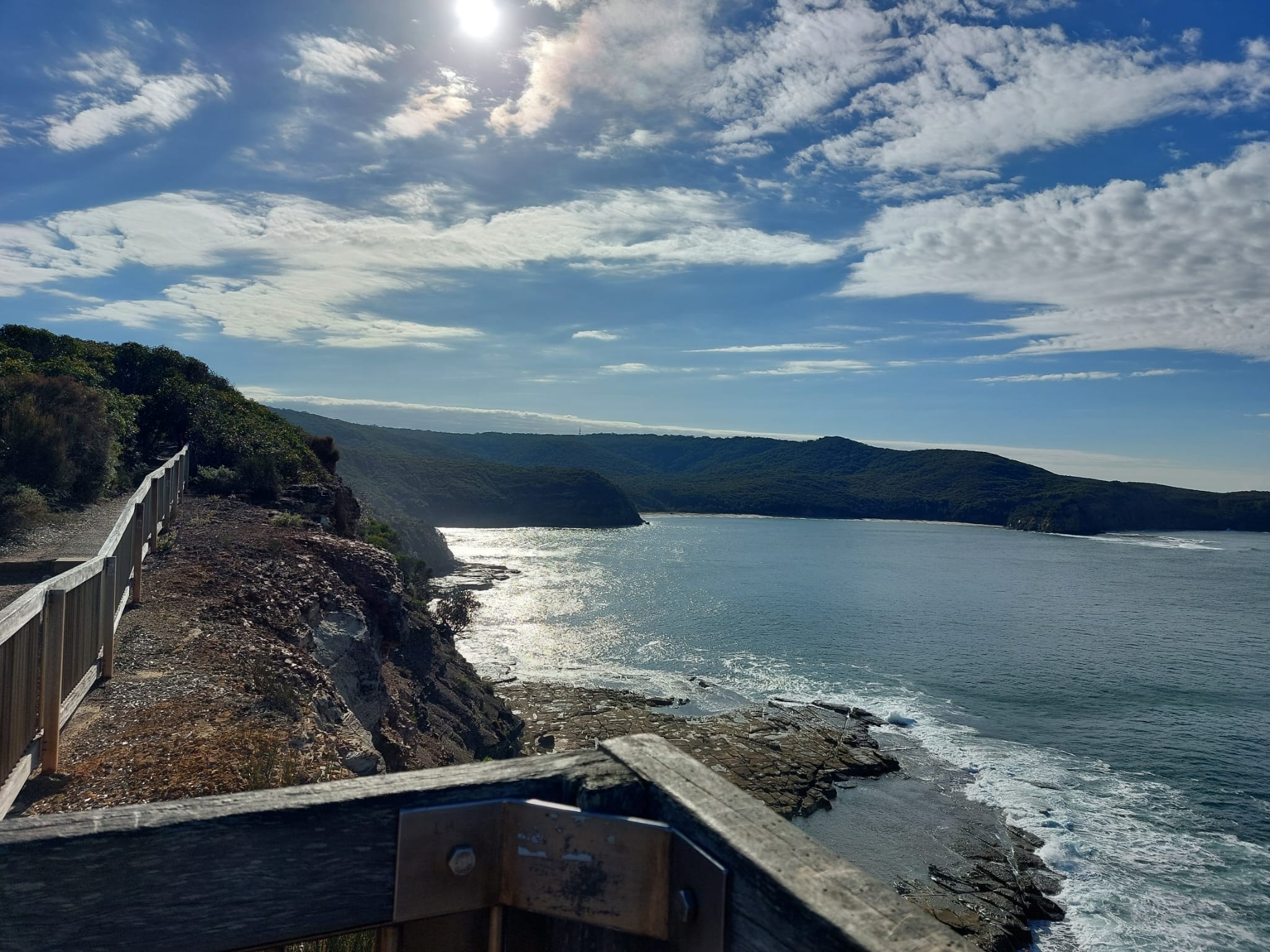
Even while injured, I have to be out in nature. Connecting with nature makes me happy. In my opinion, it’s important to feel positive and happy while recovering.
A few learnings (so you don’t do the dumb stuff that I do)…
Progressive overload in running could look like increasing a kilometre a week, if you are focused on the distance. It does not look like suddenly adding a 4th day of running that’s 10km long (my mistake).
One goal at a time. I tried to progress fast in both gym (resistance training) and running. Trying to build muscle and endurance in one training program was too much. 2 days of strength training and 4 days of running were also too much for someone who had only begun running 12 months ago.
DOMS is not ok if it persists and doesn’t go away. It is not a sign that your workout program is working well, but instead, a sign of stress that needs to be resolved before your next workout. Having severe DOMS after every workout for months will eventually lead to injury.
Muscles recover faster than tendons and joints. Just because you can lift heavier, doesn’t mean you immediately have to push harder and apply progressive overload. It’s ok to repeat some weeks with the same weight, reps and sets, to let the connective parts catch up.
Overtraining will become a barrier to muscle growth. A lot of ‘muscle growth’ happens while we rest and adapt to the stress, so without appropriate rest, there won’t be appropriate adaptation and growth.
There seem to be a lot of people on social media who could “run a marathon in a year.” It may or may not be true. But what I certainly don't know is the full story. Are they also going through a heavy resistance training gym workout for the legs 2-3x a week? Did they have an active background, play team sports, or run before? How did they “complete the marathon”? It's funny that when I ask some of the people I know, they mentioned they walked some of the track to catch their breath. Nothing wrong with that, but “complete” doesn't necessarily mean running it all the way with no stops. Did they go on holidays and take 2-3 weeks off from running during those 12 months of training? There are so many questions to ask to get the full picture of someone's training journey. Without knowing all of that, it's easy to think, why can't I do what others can do?
I could run 7km after a patella tendon injury that happened less than a month ago. This time last year, I could only run 3km (really slowly). My ‘injury recovery self’ is so much better than ‘me a year ago’. Taking off 2-3 weeks pushed me back a lot; I won’t be able to do the half-marathon I planned in August. But I’m not starting this journey from 0km. My body is weak and strong, weird and incredible at the same time.
This is the same for the gym. My “gentle” lower-body workout in the gym was equivalent to what would have exhausted me back in January this year. The body remembers. The body recovers much quicker than we think.
My next training program has ‘rest days’ and ‘rest weeks’ built in. For the first time, I planned out specific days to rest. Excited to see how that impacts my progress until the end of the year.
Injuries cause the biggest setback. 3 weeks of rest (or not doing much) lost me 2 months of muscle gains and gave me 700g of fat, pushing my body fat percentage up to 24.6% (equivalent to 1.5 years ago). Seeing that on a DEXA scan gave me a shock. Not sure how much I’ll force building muscle moving forward (given how slow women progress with that anyway), but I’ll certainly focus on not getting injured.
Excited to see how I progress during the next month. Looking forward to building back my endurance and strength, and continuing my training journey for a half-marathon.
Thanks for reading! Subscribe for free to receive new posts and support my work.