

Another two things to cross off April’s list.
Test your max in preparation for a hybrid strength training program - ✅
Get Dexa scans done - ✅
Today was the last day I went to the gym before our hiking trip to New Zealand. Learning from the past setbacks, I decided to give my body a break before attempting a strenuous hike.
Below are some of the questions that circled my head in 2023. Since then I’ve done a lot of research, so will try to answer them as best as I can.
Is resistance training necessary for Grade 5 hikes?
I’ve seen people with many years of hiking experience built up on them. They could do tough trails with impressive energy without having a regular gym routine.
However, being strong in your lower body when you are carrying +15kg on your back and climbing on rocks as tall as your hips for 8 hours per day on a 5-day track will be very advantageous.
Side note: I train hard for reasons outside of hiking. I don’t think one needs to go to the gym 5x a week, run 3x a week and push to stretch their limits. My schedule is not an example of what should be done for tough hikes.
Does upper body resistance training help with Grade 5 hikes?
Yes, but it’s not a must-have. There is a difference between surviving a hike and really enjoying a hike. Being strong in your upper body will allow you to carry your heavy bag for long durations without feeling super tired. It’ll allow you to continue hiking with your bag on (rather than taking it off, dragging it around, handing your bag to your partner to hold) when climbing on rough surfaces, holding onto ropes etc. On the South Coast Track there was a rowing section which was very hard to complete. There were also sections where you had to push through the bush and remove branches in your way. Overall, the stronger you are, the more you’ll enjoy hiking.
What are the best gym exercises for hiking?
The ideal formula (in my opinion) is probably mobility (balance, flexibility) + cardio (running) + resistance training (that replicates hiking motions).
Some examples of exercises that can replicate hiking motions are dumbbell step-ups (calf height, knee height, hip height), crawling/squatting motions with weights, and reversed/lateral/walking lunges with weights (imagine you are leaping over deep mud with your backpack on).
Most common hiking injuries involve ankles, feet, calves and knees. Exercises that can strengthen these areas are calf raises, banded lateral crab walks, single-leg hopping, and running barefoot or backwards.
Fun fact: building glute muscles can take off the pressure on other parts of your lower body when hiking (which reduces chances of injury). This was a recommendation by a few of the physiotherapists I’ve seen.
Progressing on the balance ball with various exercises is one of the best things a hiker can do (in my opinion). I’ll make another post on this topic.
Does running and resistance training clash?
There are a few reasons some people don’t like to do running and resistance training at the same time and my opinions.
It’s challenging to recover your lower body when you are doing both.
Yes, true. It’s important to progress slowly to prevent injury, eat well, sleep well, and engage in recovery activities. I love rolling almost every day to ease my muscles.
It’s confusing to estimate the right amount of calories to eat (if that matters to you).
Maybe, but you can adjust your calories based on your hunger levels, waist measurement, or Dexa scan results. You can always gradually increase or decrease your daily calories (rather than instant jumps). It feels like the end of the world if you eat 50 calories more than you should but it is not. I need to remind myself that.
The goals may seem to clash if you only view running as an activity for fat loss and resistance training as an activity for muscle building.
While I was never properly able to achieve this, David was able to lose fat and gain muscle at the same time. It is possible. I also prefer to not view running as an activity only for fat loss. Running can be a fun new challenge; it can improve mental health, cardiovascular health and endurance; you can see beautiful natural landscapes faster than hiking.
My Jan-April volume training program split (week 12)
Monday:
Upper body & mobility gym: dips bodyweight (6-8 reps, 4 sets) + incline chest press 7kg (8-10 reps, 4 sets) + tricep extensions 18kg (12-14 reps, 5 sets) + calf raises with 8kg dumbbells (10 reps, 3 sets) + black band crab walks (24 steps there and back) + balance ball push-ups (5-6 reps, 4 sets)
Beach run: 3.5km on soft sand
Tuesday:
Lower body gym: hip thrusts with black band 60kg (10-12 reps, 4 sets) + reversed lunges 30kg (10-12 reps, 4 sets) + hip height box step ups 5kg (10-12 reps, 4 sets) + single leg deadlifts with 2x 6kg dumbbells (10 reps, 4 sets) + hip abductor machine 11.5kg (12-14 reps, 4 sets)
Wednesday:
Upper body & mobility gym: chin-ups bodyweight (5-6 reps, 4 sets) + T-bar row 7.5kg (8-10 reps, 4 sets) + balance ball calf raises (10 reps, 3 sets) + balance ball knee up feet circles eyes closed (10 reps, 3 sets) then touch toes (6 reps) + lat pull down machine 10kg 2x (10 reps, 5 sets)
Thursday:
6km run around the block focused on pace
~20 min core workout: 1 min planks (x3) + 20 V-crunches (x4) + 20 toe touches (x5) + 20 cocoons (x5)
Friday:
Lower body gym: pull-ups bodyweight (3 reps, 3 sets, 30 sec rest), barbell over shoulder squats 30kg (10 reps, 4 sets) + reversed lunges 30kg (10-12 reps, 4 sets) + knee height box step ups 6kg 2x (10-12 reps, 4 sets) + cable kickbacks 15kg (12-14 reps, 4 sets) + hip adductor machine 13kg (10-12 reps, 4 sets)
Saturday:
Relaxing yoga with stretches
Rock climbing alternating with bouldering: had to stop after 3 weeks due to injury
Sunday:
Long distance run: have been hitting 10km the past 6 weeks
Some reflections
Wins
Introducing a strict mobility program into my gym sessions. My balance has improved so much over the past 3 months. It makes me feel more confident.
Running barefoot on sand. I feel that my feet, ankles and calves are tighter and stronger. This also improved my running capabilities overall.
Overall gaining almost 600g of muscle in 3 months. That’s pretty good for a woman who’s no longer a newbie in the gym. I can confidently say that the volume program (including running) was designed well.
Failures
Bouldering over Saturdays has been a good idea in theory, but executed poorly. I introduced that around the same time as introducing pull ups on Friday, which meant that I was pulling my body weight up on Wednesday, Friday and Saturday. I was also not warming up before the Saturday sessions. Eventually caused my shoulder injury which took me a month to fully heal, set my training program back and caused minor muscle loss.
Balancing out the imbalances by training the weaker side more. Honestly, not sure why this didn’t work. I had a very sore left side for 3 months and still grew more muscle on my right side. Need to do some research on this.
Learnings
I have hyper-mobile shoulders. I discovered that during a physio visit after my shoulder injury.
Muscles adjust to progressive overload faster than the connective parts of our bodies. The last month of the volume program has been a grind. Each week, I was getting too tired and sore, finding it more challenging to complete the sets and recover. That’s also when I began to feel my joints and the connective tissues getting rusty. I wonder if I should not have progressively overloaded every week during the 2nd half of the program, or significantly lowered the intensity during period weeks (rather than reducing weight by 10%).
I will not run hungry in the morning again. Terrible idea. I don’t perform or progress well when hungry.
We all have a genetic potential to build muscle in certain parts of our body more than others. For me, this seems to be my trunk. 3rd consecutive time that I either built the same (or even more) amount of muscle on my trunk as I did for the glutes and legs combined.
Other Reflections
I have gotten scared about injuries, more and more as I train over the past 3 years. Having an injury means I don’t get to hike or run — don’t get to be out in nature exploring, regulate my hormones, and feel confident. It sucks! I need to build a better mind-body connection. Sometimes, I don’t know my body’s limits and push too far, too much and too soon.
I felt confused about how much to eat over the past 3 months. It’s not easy to estimate the required calorie intake when you are building up your running volume. Calculators on Google recommended me to eat 1800 calories back in January for maintenance. I began this training program with 1560 calories (which was a +60c from December) and built up to 1680 calories. I wanted to do a slow build-up as I was scared of gaining fat. I was properly hungry for a third of the program. This is reflected in the fat loss I had on most parts of my body.
Some stuff that I have been experimenting with (not advice, as I’m not a professional)
Lowering the intensity of workouts leading up to my period
Rationale: to reduce heavy cramps + regulate period timings
Result: I have been able to reduce period cramps. However, this can also be attributed to healthier eating overall, summertime (cold always makes cramps worse), or getting older. Did not help regulate period timings.
Observation: not sure if lowering intensity by 10% was enough for this experiment to work. 20-25% may have been better. This experiment mostly helped my body take a bit of a break from the constant increase of sets in my volume program.
Taking Powerade powder before gym
Rationale: recommended by some exercise scientists for people who train on an empty stomach (early in the morning), especially if they are female running on a lower body fat % or are on a calorie deficit, for having a good amount of energy during training.
Result: helped me to uplift my energy levels in the gym. It also masks the taste of creatine.
Observation: I should swap with a lower-sugar electrolyte sachet as it will be healthier.
A variety of dietary modifications to improve my gut health based on a gut health intelligence test I completed in late January
Rationale: gut is the only other organ that receives and sends signals around our body, other than our brains. That’s why our guts are called the “second brain.” Studies by gut intelligence research companies like Viome reveal the connection between gut health and metabolism, hormonal health, immunity and energy levels. Surely, having a healthy gut will support your training goals, right?
Result: great results. Going down this pathway was an incredible learning experience for me. I should post about this separately because there is a lot to cover here.
Running barefoot on sand
Rationale: to improve feet, ankle and calf strength. Recommended by various physiotherapists, longevity researchers and exercise scientists that in the long-term, walking and running barefoot will reduce chances of injury.
Result: already mentioned, very successful.
Some stuff that I will be experimenting with after the New Zealand trip (not advice, as I’m not a professional)
Pomegranate & tart cherry juice after workout
Some research suggests this mixture helps with post-workout recovery.
More promising research suggests pomegranate juice can relieve pre-period and period symptoms. This can again boost my performance and mood during training.
Results from the gut health intelligence test I’ve completed show that pomegranates and cherries are my “superfoods,” specifically great for muscle recovery, immunity and reducing inflammation and cell damage.
Animal movements (mostly in research phase)
These movements aim for agility and mobility — can be another great way to prevent injury (something I could incorporate during my warm-ups).
If you’re confused, check out the 20 Flow Animal Movements.
A variety of supplements to improve my gut health based on a gut health intelligence test I completed in late January
The personalised dietary modifications made a visible change within 2 months. However, I’ve only applied a third of their recommendations. Now, I'm keen to dial up to 60%.
If you’re curious, here are my results
Max Strength
Dips: +8.65kg is 1 rep max
Dumbbell chest press: +15kg x2 is 1 rep max
Chin-ups: +8.65kg is 1 rep max
Seated cable row: +45.5kg is 1 rep max
Lat pull down (neutral grip): +45kg is 1 rep max
Hip thrusts (with barbel): +97.5kg 1 rep max
Stiff leg deadlifts: +61.25kg 1 rep max
Barbel over shoulder squats: +55kg 1 rep max
Dexa Scan Results (3-month period)
~580g muscle gained (approx equal split between lower body and trunk) & ~180g fat gained = 23.5% body fat (same as the previous time).
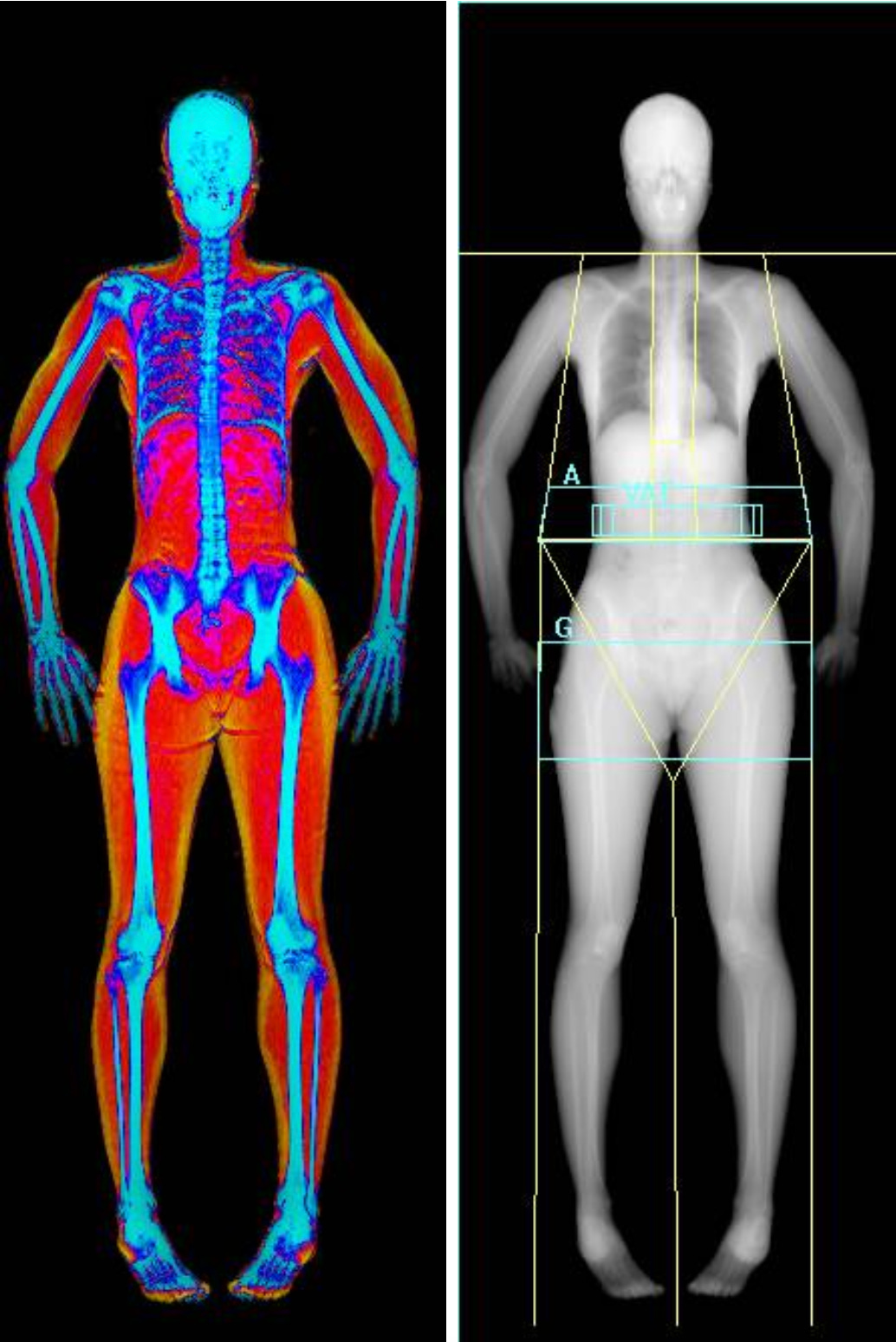
If you’ve never seen a Dexa scan image before, here is a generic example (found on Google). They look very cool.
Questions: as always, if you have any questions, drop a comment (or send a message) and I’ll reply.
Thanks for reading! Subscribe for free to receive new posts and support my work.