

Meet Doa from January 2024. Her New Year’s resolution was to make a career transition into Product Management — a formal title with full-time responsibilities. She was a part of the “product team” in a start-up, switching hats between product, marketing, customer support and QA. She played musical chairs according to business needs to get sh*t done for the 2 years prior.
If the next 3 months had a tune to it, Meghan Trainor would be singing it, because for most of the time, she heard…
“My name is no, my sign is no, my number is no, uh
You need to let it go, uh
You need to let it go, uh
Need to let it go”
If you are reading this, I am assuming that you have already gone through my ultimate checklist to land your first product role and are now ready to send your first set of job applications. In this article, I’ll be sharing what to expect during this process and how to stay strategic and sane throughout it.
General Useful Points
Treat career transitions like a marathon, not a sprint. Sounds obvious, but hear me out. If you think the job market is tough right now, it’s 2x tougher for you. Transitioning into a product role takes 6-12 months. It’s a long journey! I wouldn’t try to ‘hack out’ job applications over one weekend. Consistency is what matters. Spare some regular time every week, so you don’t burn out within the first 2 months.
Optimism is a highly useful skill to have. Highly recommend.
Reminder: you need to translate your past life into the language of product. In other words, don’t try to speak French when trying to find a job in Japan. The whole job application process — your interactions with the recruiter, hiring managers, resume, how you respond to interview questions, etc — needs a Product Manager. Not an ex-marketer, or an ex-designer.
Expect Prejudices
And prep for them! Before you start sending applications to product roles, I want you to know that no one wants to hire a non-product manager to a Product Manager role. Flash news.
Treat prejudiced comments similarly to customer complaints or concerns about your future product. If handled right (and you respond well), they could even become your advocates.
Some common prejudices to prep for:
“You only want to become a PM to feel like a CEO who owns cool products.”
Easy fix! Most interviews start with a “tell me about yourself” line. This is your chance to set the context. Tell them about yourself, what brought you to a career transition and what product management means to you. See Why Do Want to Be a Product Manager for some guidance on this.
“You’ll need too much hand-holding to learn.”
At the start of this article, I mentioned that you need to translate your past life into the language of product. Well, that surely helps ease this concern, along with your confidence during the interview rounds.
I am a big fan of creating mini portfolios when applying for your first product role. This can be a visual way of summarising your experience. You can share your screen during an interview and talk through how you are growing as an aspiring PM. This will be direct evidence that you demonstrated product ways of thinking. Nowadays, this idea is becoming quite popular, due to the rising popularity of AI, where leading companies in the space are requiring not just CVs but also portfolios to attach in the application form. Treating product job applications like design and engineering applications will become the norm in 2026. The idea of building a portfolio scares aspiring PMs due to their lack of experience. Hey, I never said a portfolio needs to show end-to-end build and launch of 5 different successful tech products. It could show simple experiences. What matters for aspiring PMs is for the product portfolio to demonstrate product ways of thinking.
“You are going to bring marketing/design/HR/past job culture” (and that’s a threat to our existing product culture).
As mentioned before, speak in the language of product. In my experience, the “product sense” questions serve the purpose of assessing this risk. Practise not to “respond well” by memorising structures, frameworks and templates, but by understanding and empathising with the product mindset. This might be a good read for you: The Art of Blending Into the Product Culture.
“You are not technical enough to become a PM.” This can appear in other ways, like “not sure if you can get along with/effectively communicate with our engineering team.”
I don’t want to be too repetitive, so directing you to the “Thoughts on the not technical enough judgement when wanting to become a PM” article. You’ll find many tips & tricks to alleviate this concern.
Even the jobs that rejected me after interview rounds wished me well and said they believe I will land a role soon with another company. They saw the passion and the potential. In fact, most rejections happened because the job requirements changed. Preparation allows you to have some control over the interview flow and address concerns professionally and elegantly.
How to Apply
Transitioning to a new career is challenging, so any way to smooth the experience counts. A new role may have a lot of unknowns, so finding areas of relatability and passion can make the process smoother (i.e. reduce your risk as a hire). Draw your focus on similar industries, similar types of customer segments, companies or products, similar processes (operating methods), or perhaps spaces where your ex-colleagues have worked (and they can refer you). Landing a role in a familiar space (and one that you have a passion for) will make your transition stage easier and more exciting as well.
That being said, if your space is too niche or you can’t find enough product roles in familiar spaces, then increasing your surface area will help you land a role faster. I have observed individuals waiting for over 12 months to land their first product roles because their search was too narrow. They all had a regretful attitude, as the process dragged a bit too long. I am not advocating for batch applications, trying to hit over 200 resumes sent within X months. However, hiring managers will only discover you if you are in their vision, and landing a role always involves some luck. So, increase your surface area to gain more visibility.
Titles are going to feel very confusing. Product culture values “projects” over titles. This may depend on the complexity of the product, technology or industry the PM is working in. Some PMs are very technical and operate in tricky systems that require valuable niche skills. Some PMs work with well-known consumer products that grow slowly and maintain the status quo. You will find some PMs getting paid +$200k a year, while others are only making it to $70k. Other roles (i.e. marketing) would like to think that they operate in the same way (by providing advice to young people, “focus on your work, titles don’t matter”), but that’s not really the case. Titles mean something for a lot of types of roles. They imply a certain salary range, authority over decisions, and certain job responsibilities. Certain titles automatically win respect and have a greater say. Product is a role that does not have direct authority over the ‘executers’ (the engineers); one of the original rules of product culture is leading by influence (and gaining respect due to skills), not by authority. This makes product titles confusing, because a “Product Manager” job ad could pay +$200k a year and genuinely require difficult skills with +10 years of experience, while another “Product Manager” job ad could only be after a smart junior person with a ton of potential, energy and curiosity to grow. So, let me clarify some things.
If you are finding it really hard to break into product and wondering if you should take an intermediate step by applying for BA or Project Manager types of roles, then expect to wait around for another 3 years. I have not seen that strategy make an aspiring PM’s career transition easier or quicker so far. I’ve observed the opposite and wrote a whole section about why it doesn’t work in How to Gain Experience in Product Without Having Experience in Product article.
I generally don’t recommend applying for “Junior PM,” “Associate PM,” or “Product Intern” titles, unless it’s your dream to work for a company like Google and this role is advertised by that sort of company. If you really want to put Google’s (or an equivalent) logo on your resume, then a junior/intern title may actually be your only chance of entry (unless you are tightly connected with someone who has influence over the hiring decisions). For every other company (and to some extent, for companies with flashy logos too), my main opposition is the lack of learning opportunities. The roles of a product person involve a list of skills and activities — you should expect to manage a product/feature/user flow end-to-end. If you are more junior, you will receive more support and hand-holding, but should still work like a PM. Usually, the “junior” titles are shoved to parts of a PM’s role and receive visibility over the other parts by shadowing Senior PMs. I’ve seen people whose day-to-day is writing Jira tickets and acting as the messenger between stakeholders, not actually executing much. This is because the types of companies that split product’s job titles to so much granularity (i.e. intern —> junior —> PM —> Senior PM —> Principle PM —> HoP —> Group Product —> VP of Product) have very strict job descriptions. It’s predictable and very structured, but you usually can’t step outside of it to learn more. You can’t learn about product without doing product! By the way, this structure also comes with a strict “time of experience” (i.e. even if you are amazing, unless you complete X years in title X, you won’t step up to title Y). Maybe it is personal preference, as I’d like to be thrown in the deep end of projects, and learn best while doing (even if the “doing” involves a lot of struggling). I know some people feel safer operating in environments where everything has been decided in black and white for them. In that case, perhaps you should go for the Junior PM roles. I’d just hate to see you writing Jira tickets for 12 months behind the scenes after grinding through 6-12 months to land your first role. One more thing, in my experience, it is actually not any easier to land an Associate PM role, in comparison to a regular PM role, due to the equal amount of competition. So, this is certainly not going to be a shortcut for you.
So, apply for the Product Manager roles. It may feel scary (it did for me at the time), but go ahead and click the apply button… once you read the job description and decide if it actually suits your experience. This is the tricky bit. A few tips:
Read a lot of PM job descriptions. You will start to see commonalities between certain roles and realise that some seem to require more complex skills and a wider set of skills than others. Try to understand the level of authority of this role from the job description.
Some roles will describe more about the PM’s characteristics than the tasks they are doing — i.e. use words like “agile, eager to learn, curious, adaptable,” along with “execute XYZ with this other person.” This type of language is a clear indicator that the company’s ideal candidate is junior, so their attitude and work ethic matter more, as they will already receive support from more senior people.
Look at the number of years of experience required. 1-3 years is a clear sign that the role is quite junior. Very safe to apply to. Some roles require 3-5 years of experience, which may still be ok to apply to if you think that the job description doesn’t sound too senior. Note that most companies will use the standard 3-5 years of experience as their requirements, without actually thinking deeply about what that means.
You may also want to see the past product hires of the company and the background of the hiring manager. If you can see a track record of super-experienced PMs being hired from really hotshot companies, then you probably don’t have a chance.
Lastly, have a go at applying to different types of product roles. Learn from your own experience. See what you are naturally attracting.
When it comes to how to apply for a product role, there is a huge controversy. Should you or should you not send a cold outreach, a personalised message to the hiring managers?
I don’t see any point in discussing if this is morally right or not (i.e. is trying to cut corners wrong), given how many other morally wrong practices happen during the whole candidate selection process (i.e. ghosting candidates, ridiculously low-balling their salaries, etc). We all try for ourselves in business (to some extent). For certain sensitive topics and processes with a lot of unspoken rules and “exception” cases, I tend not listen to what people say much, but observe what people do instead, which can sometimes conflict.
I can only speak from my experience whether this works or not. Reminder that I also helped quite a lot of aspiring PMs land their first product roles. So far, the best interviews I had came from cold outreach, because the hiring manager was interested in me from the beginning. All the roles I ever landed (including ones within the same organisation) came from informal ways and cold outreach. I also tried submitting my resume in formal ways. Funny, but it seems like resumes sent via cold outreach get read more than resumes submitted via an online application portal.
Here are some of my other observations:
Cold outreach works in some cases. Doesn’t in others. Same type of message and same amount of passion — always about 25% response rate for me. In my case, that’s actually a higher percentage than direct applications, because historically I’ve been quite ambitious with the roles I targeted. I sought to be challenged more, and brought Groucho Marx’s attitude of refusing to join any club that would have me as a member. When you aim high, you become a “risky” hire, who most hiring managers don’t want, and definitely no recruiters want. So, I have been reluctant to put much effort into a <5% chance of entering a company through the door, when I could put in more effort by climbing on the roof and squeezing through the chimney. Not the most graceful way, as you have a smokey arrival, but you clean yourself off and get to work. Soon, people forget about it, and you become part of the furniture. Jokes aside, the response rate is different for each person, so run some tests and see if it’s worth following through. I assume for an aspiring PM, chances of a cold outreach responding to a passionate, personalised and proactive message is higher than a recruiter choosing a candidate with 0 formal experience over hundreds of candidates with more than 0 formal experience. Trust me; even 1 year of formal product experience makes the application game 10x easier.
There isn’t one right structure to follow when crafting a cold outreach. Don’t send an essay — this is not your cover letter. Attach your resume to the message (and your portfolio, if you have one and if it’s worthwhile). What worked for me is being my authentic self, keeping it simple, not too formal, and making the ask clear. Experiment and see what works for you. Some LinkedIn posts on cold outreach for inspiration (different perspectives):
“The cold email template that helped me land 6 interviews in 2 weeks” by Amani Chowdhry
“This candidate was sending 50 cold emails a week. But never got a single reply for a new job. So, we rebuilt his message from scratch…” by Mitch McDermott
“As a hiring manager who’s reviewed thousands of resumes, here’s the #1 DM mistake I see job seekers make” by Kelly Vaughn
“I’m a hiring manager. Here’s how to actually message me when you’re looking for a job” by Scott Graham
Other suggestions on Reddit:
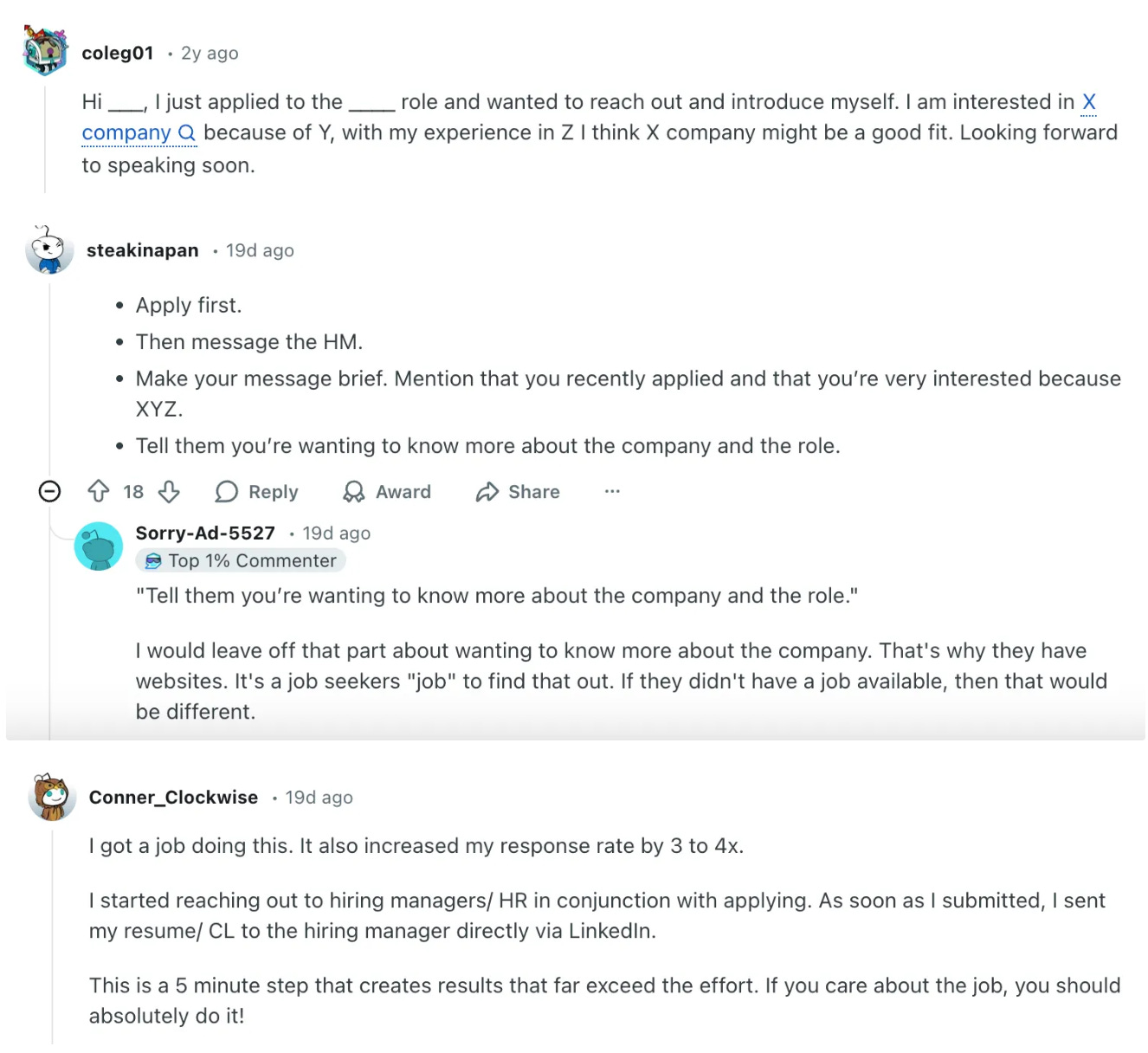
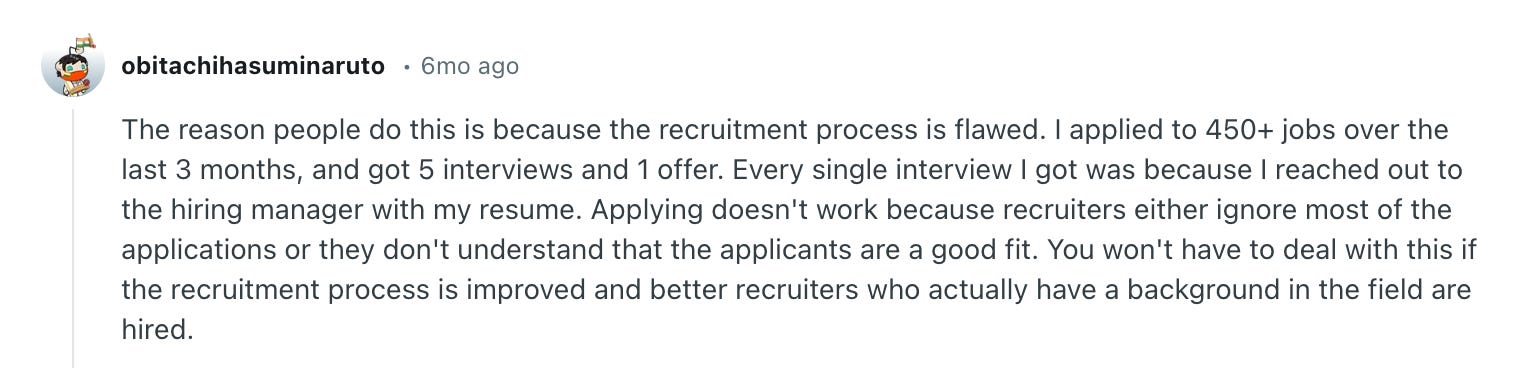
Cold outreach is unfortunately growing out of popularity because more people are doing it. This is one of those pre-COVID and post-COVID situations. So, previously what was considered to be a proactive, excited and courageous approach is now running the risk of being seen as spammy, rude and annoying, like, “you think you’re so special trying to cut in front of the line? Apply like everyone else!”
Cold outreach works much better when there is a common ground with the hiring manager, like similar backgrounds, interests, etc. Or, maybe you know someone from that company enough to mention their name (trusting that they’ll use positive adjectives to describe your character), but not enough for them to refer you to the role. If they are a regular writer and you have commented under their posts before, or vice versa, you can have a warm “past connection” to stand on as well. Just makes things a little less cold.
Cold outreach is scrappy. It makes the application process less formal, non-linear and messy. Do you know what else is scrappy, informal, non-linear and messy? Start-ups. Companies with fewer than 30 people. Even up to 50 people is ok. Cold outreach works best for smaller businesses, which is just my type of environment to operate in.
Do NOT cold outreach people asking for a referral, or asking them to find you a job in the company they work for. This is genuinely frustrating. It’s spamming. Why would anyone spend their time doing free labour for someone they don’t know to find them a job? I didn’t realise I had to write this point, but given how many LinkedIn DMs I receive from people who ask me to find them a role (i.e. “do you know any roles that may suit me? Can you send me their links so I can apply?”) or refer them to a role, I guess I need to make it clear. No one will risk their reputation by referring someone they’ve never worked with. If someone has worked with you before, they may refer you, only if you were actually great to work with. Referrals are arguably more risky than making the hiring choice, and the referrer gets almost no benefits in return.
I helped both men and women land their first product roles. Women tend to have 4-5x more chance of success with cold outreach than men. They also tend to have a higher chance of success when asking for Zoom calls and coffee catch-ups to seek advice on transitioning to a product role. Some men called out that this is not worth their time, given how low the response rates are. It’s just the nature of how things are in life. Sorry.
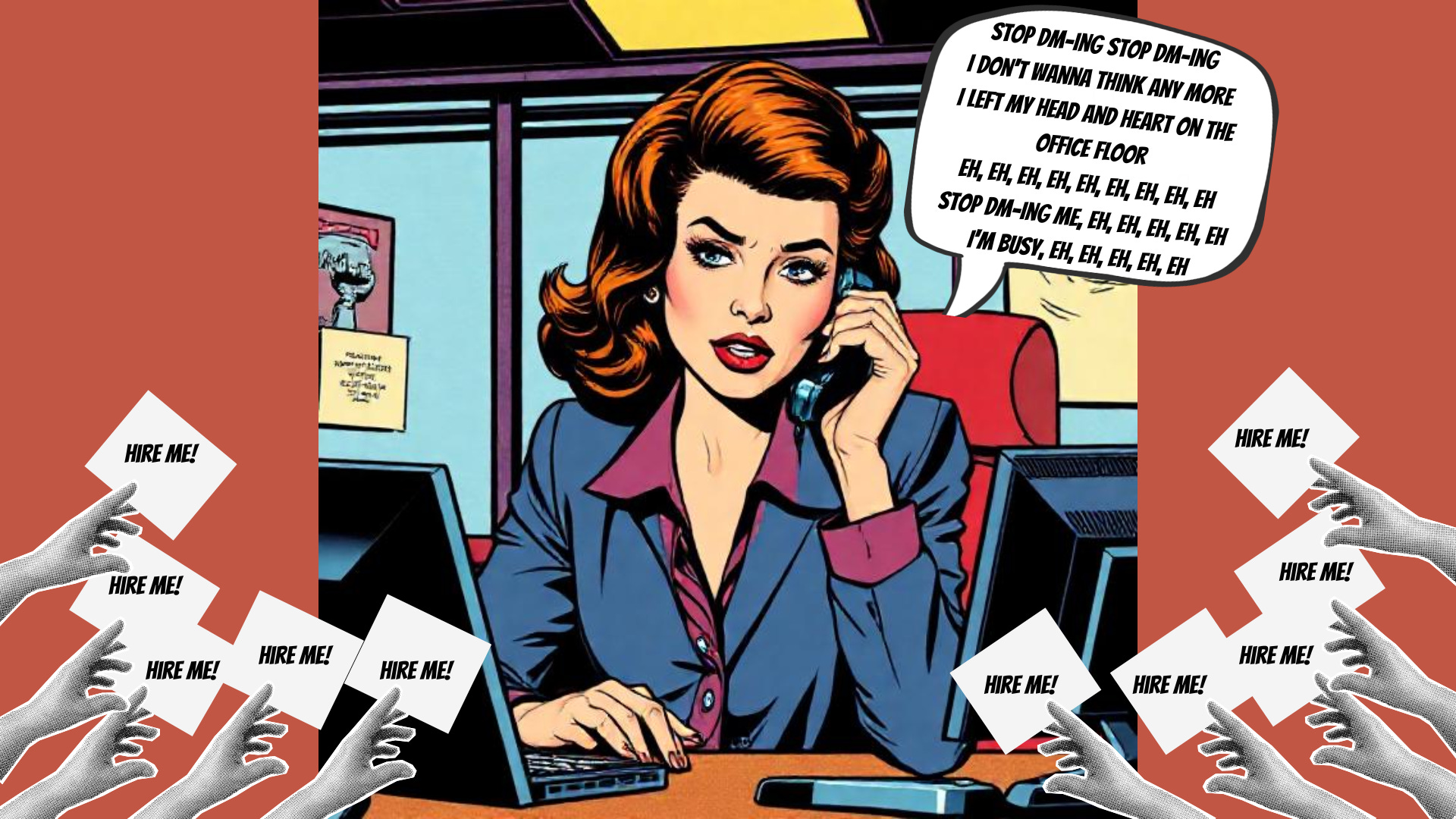
In 2023, I remember seeing a LinkedIn trend of hiring managers from hugely popular companies like Canva making posts like, “don’t send me a DM, do you know how many messages I receive every day wanting a chat so I can hire them? Just apply. If you’re not good enough to pass through the recruiter, then there is a reason for it.” Not an attitude that I like, but also understand the frustration on their part (and the desire to boast about how amazing and popular they are). I’m sure that someone even posted that they receive +200 messages every day begging for work. My only comment is that if someone is operating like the Grand Central Station, better not apply to work with them. As they said, they receive hundreds of messages, probably thousands of referrals from ex-colleagues, and tens of thousands of formal applications. And to be frank, they probably already know who to hire for the role and only told the recruiter to post the job ad to follow through the rules. I’m not saying that applying for hotshot companies is a total waste of time. But your chances of getting through the door are almost impossible. So, don’t hope for much. The best logos want to work with other people who are very experienced in other companies with the best logos. If you are reading this post, I am assuming that this is not you. Not yet.
I found two other LinkedIn posts by Shobhit Chugh, which are good reads:
“Product Management job search takes a lot of time. Let's eliminate the biggest sources of waste.”
“It's not about applying more. It's about being intentional.”
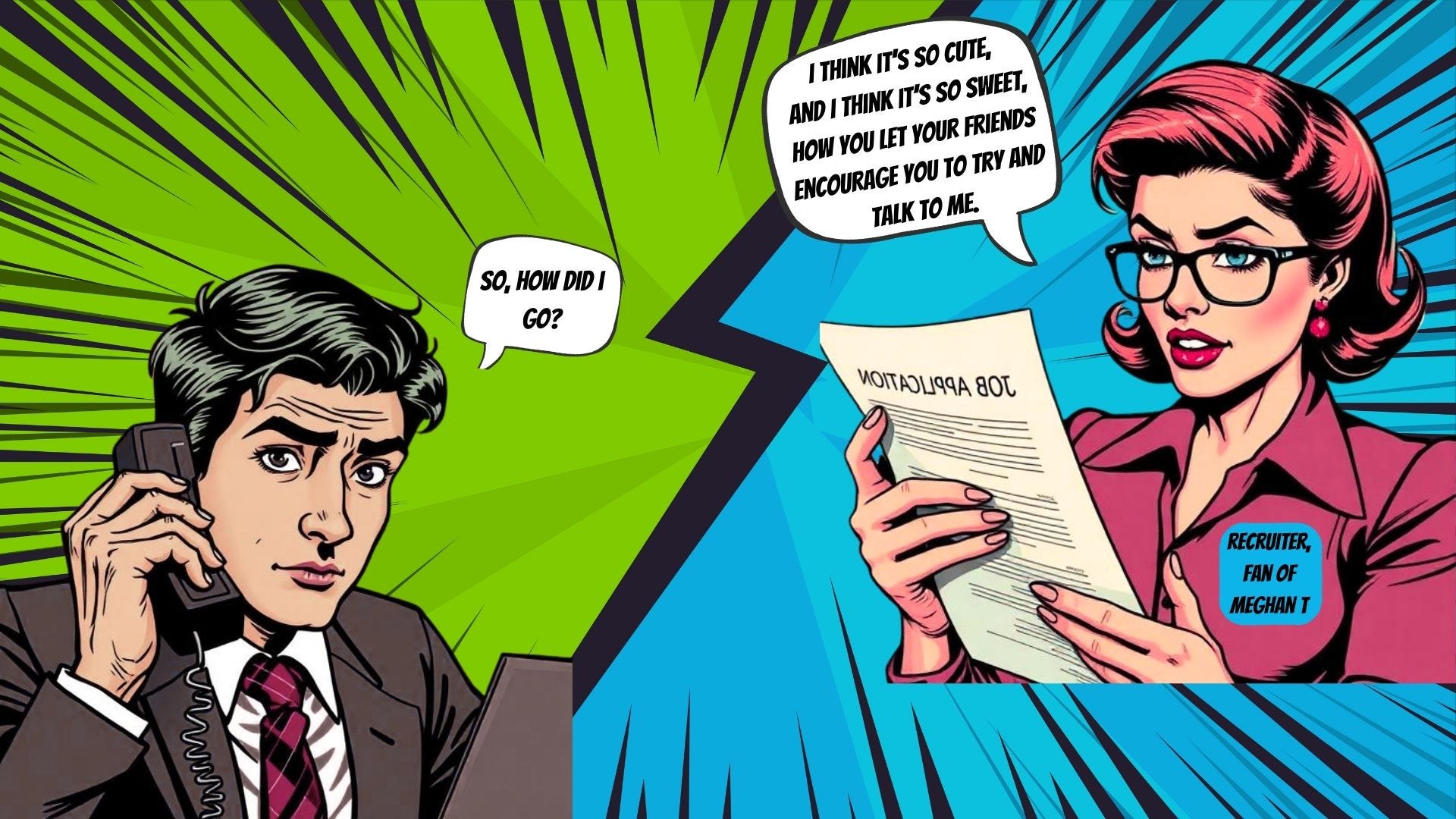
Before moving to the next stage of my article, I want to state the common hatred aspiring PMs feel towards recruiters. Those rude rude recruiters who won’t see the passion and potential in you, the hardworking aspiring PM who’s doing everything you can to land your first product role. How dare they?
Here’s the truth I had to learn: most people who dislike recruiters do so because they don’t understand the role of a recruiter. I was one of those. A recruiter’s job is to reduce hiring risk by selecting the most qualified candidate for the provided salary range. It’s not to give you a shot, empathise with your ambitions, or to recognise your inner potential.
Adding to that, rarely does a recruiter know enough technical details about a role to make informed decisions. Can you imagine a recruiter having a deep understanding of product, different engineering functions, marketing, customer support, UX design, UI design, operations, finance, sales, sales engineers, etc., etc.? They usually know “just enough” via following through some keywords and numbers to make decisions. This is also why AI is rapidly replacing recruiters, because it can also recognise keywords and numbers. In fact, it can make 10x better judgement (probably more) because at least it can have a deep(er) understanding of product, different engineering functions, marketing, customer support, UX design, UI design, operations, finance, sales, sales engineers, etc.
So, why won’t recruiters send you through the door? Because they want to do their job well (without spending 10 hours learning about each role they send through the door).
Interview Process
Let’s set one thing very clear: you won’t be hired for your limited experience. You will be hired for your personality traits, potential, intelligence, confidence, working style, and demonstration of the product culture. These will determine how risky a hire you are.
Before you come into the interview rounds, make sure you have a good story to tell. Your narrative, confidence and transferrable skills will matter a lot. Practise talking through why you want to be a PM, what experiences led you to a career change and your transferrable product skills. Sharing a strong narrative with confidence is impressive because it shows initiative and reveals glimpses of your character. Every hiring manager is different; some prefer to take the lead and stick closer to a formal interview structure. Others prefer to stay present and curious, asking a lot of follow-up questions to get to know you. Someone once asked me what I’ve been doing so far to learn about product, and I showed them my roadmap of learning, how I prioritised what to learn/experience, and examples of the projects I’ve taken up. It’s proof that you can take ownership, even in an ambiguous situation when you are not the expert.
I have observed that interviews flow more informally for aspiring PMs because hiring managers are more interested in assessing personality traits and culture fit than diving into technical questions and unpacking your limited product experience. Makes a lot of sense. There is a lot of opportunity in a more conversational interview, because you can take some control of the flow. The key is to do a lot of research about the company. You can jump in where appropriate and say, “that reminds me of XXX about your company. I read about it in XXX and thought XXX. How does your team do XXX?”
Be confident and optimistic. Fear blocks one’s ability to stay curious and present in the moment. I understand if you feel insecure about your experience. But you can feel secure about your capabilities (of learning and adapting quickly, of taking initiative, of working hard, etc). Be optimistic because you made it to an interview round; that’s already something to feel proud of!
If you can’t trust yourself, then no one can. Lack of confidence will reflect on your doubtful and apologetic language, stutter and repetition of words, fidgeting and facial expressions, distracted and confused mind, and panicky, reactive answers. Confidence doesn’t mean trying to prove your intelligence, showing off, or pretending like you know everything about product. It’s shocking that a lot of people believe confidence and humility can’t exist at once. They can!
Some people have a strong need to rationalise confidence. Their personalities and upbringing teach them that one needs to have X number of concrete pieces of evidence to justify their confidence. If you need to artificially create confidence, take up a product course, receive recommendations from colleagues, write down your past achievements, count the number of product books you read, etc.
Lastly, if you haven’t done so already, read How To Smash Your Product Interviews, my comprehensive guide to the different types of questions you can expect to be asked in interviews and how to prepare for them. In that article, I also write about the types of questions you want to ask in an interview and how to identify red flags in companies. Make sure you have a clear idea of what your priorities, values, red and orange flags are before going into an interview. Quoting from my comprehensive guide to product interviews:
“The reality is that you will most likely end up in a team with a few orange flags because aspiring PMs don’t have many options. You decide what you can tolerate. These questions are also there to prepare you for the situation you may be entering into (set realistic expectations). It’s totally ok to take on a role for 12 months, learn some new skills as a PM, then move on to your next adventure once you have a bit more experience.”
Iterations
Everyone’s strategy of landing their first product role will be slightly different. That’s the reality. What worked in 2023 will not work in 2025. What worked for me (considering my experience, age, background, personality, interests, and gender) may not work for you. I’m here to help you draft your own strategy. I have made the mistake of handing out every single one of my tactics in great detail to people, assuming they will get the same outcome — brings disappointment.
Start by trying something. Set a number, i.e. “Every 10 applications, I will review my approach, or resume. Every 3 interviews, I will analyse feedback to see common trends and shape my responses.” Iterate on your work like a PM.
Final Thoughts
A marketer, very senior in his career, with great capabilities, once told me that all of this is starting to appear crazy to him. The grind of career transition was making him wonder… Will others judge him for being indecisive in his career? Were his past efforts climbing up the ladder for nothing? Was the risk of starting from scratch actually worth the effort?
I remember going through a similar phase of questioning life. I asked my partner, “it’s not cool to change your mind on such an important topic. Aren’t adults supposed to know what they want from life?” He had a big smile on his face and said, “that is so innocent. Actually, adults are the worst.”
Your past efforts were not for nothing. In fact, they are a huge advantage to you moving forward. I am not a fan of product people who have always been product people. They have very clear weaknesses. People who have only done one thing in their lives, especially in one type of environment, can become quite narrow-minded and sheltered. Their brains become lazy, thinking in the same patterns. They over-optimise to thrive in one type of environment, which actually shapes their careers anti-fragile. People who haven’t failed and/or started from scratch in an area of their life (i.e. career, changing countries, etc) aren’t as adaptable and resilient. Having a wide range of experiences builds character, perspective, intuition, empathy, self-awareness, brain plasticity, curiosity, open-mindedness, creativity, problem-solving skills, and connecting the dots between different concepts. Those are exactly what you need to succeed as a PM! Plus, a messy life is a much more interesting one. Nassim Taleb would argue that being too clean and perfect leads to fragility.
You never want to enter into a company where you don’t fit or belong. Rejections are great! I learned this the hard way. People judge you within the first 5 minutes. Then, their confirmation bias kicks in via selective listening. You don’t want to be a company’s 3rd choice, and they only called you because the first two rejected them for a better offer. You won’t change their minds, blow off their hats with your exceptional work ethic. Judgements rarely change, even for product people. It’s important to be the right fit for a company, so try to not let rejections beat you down too much. A lot of the time, it’s a bullet dodged. Some companies that rejected me over the past 5 years shut down (nature of startups) or went through mass redundancies. Some, I later found out from the great vine, had a toxic culture. The best career strategy, no matter your experience and situation, is to be in the right place and right time.
Best of luck!
All the images I use have been generated using deepai.org (the pop art generator). 🦸♀️
If this post is helpful to you, it will probably help others too. Share with a colleague, and if you haven’t done so, subscribe.